
Zhangjiajie Travel Guide
This Zhangjiajie guide shows you the real Avatar Mountains, the best time to see the sea of clouds, and how to explore the park without getting lost — from the glass walkway to the 99 bends of the Tongtian Highway.
Updated June 26, 2026
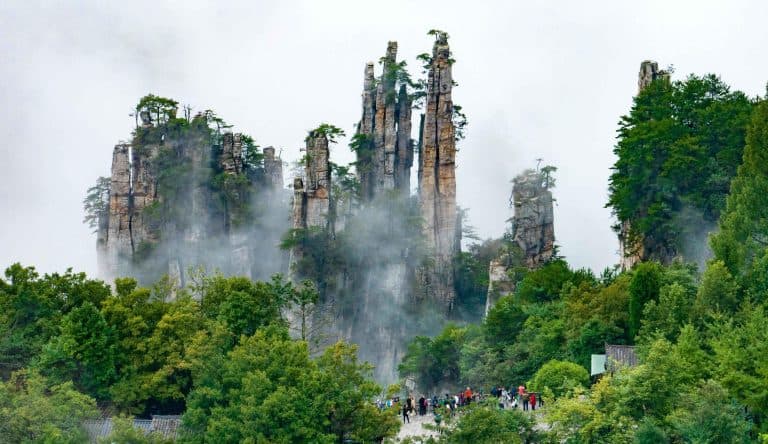
If you only have three minutes, start by taking care of these six things. Zhangjiajie is one of the first scenic areas in China to be designated a UNESCO World Natural Heritage Site. In 2024, it welcomed over 1.83 million international visitors—a 166% increase from the previous year—with visitors coming from 183 countries and regions. While the service system for foreign tourists is already quite well-established, there are still some essential preparations you should make before you go.
If you only have 10 minutes, read these 6 things first
Visa: Apply for a tourist visa (L visa) at least 4 weeks in advance. You can check the official website of the Chinese embassy in your country for the latest requirements and application steps. If you prefer a smoother process, Bespoke China Travel also supports our travelers with visa guidance, including invitation letters and step-by-step application assistance, helping you avoid delays and prepare everything correctly for your China trip. Contact us→
VPN: One thing I always tell first-time visitors to China is to think about internet access before they arrive. Popular services such as Google, Gmail, WhatsApp, Instagram, Facebook, and YouTube are restricted in mainland China, so it’s worth planning ahead before your trip.
SIM Card: For most travelers, the easiest option is a travel data SIM card or eSIM that works immediately after arrival. Many plans now include access to international apps and websites, so you can stay connected without any complicated setup.
When I help travelers plan their China trips, I usually arrange a 30-day data SIM card with 10GB of data. It’s a data-only card with no phone number, calls, or SMS, but for most visitors that’s all you need. Simply install it, turn on your phone, and you’ll be online as soon as you arrive in China.
Want to learn more? → Read my complete guide to SIM cards and eSIMs for China travel.
Payment: Download Alipay or WeChat Pay and link a Visa or Mastercard credit card. Zhangjiajie has established a diversified payment system based on the principle of “credit cards for large transactions, QR codes for small transactions, and cash as a backup.” All 3,240 key merchants across the city are now equipped with POS terminals that accept foreign credit cards, covering high-frequency consumption venues such as scenic spots, hotels, and supermarkets. Be sure to carry 500–1,000 yuan in cash as a backup; while most places accept credit cards and QR code payments, street vendors may require cash.
Maps and Navigation: Google Maps doesn’t work in China. If you’re using an iPhone, Apple Maps works fine and includes public transit and subway navigation. Android users can download Baidu Maps, but the interface is in Chinese only, so you’ll need a bit of patience. Download offline maps or take screenshots of route maps in advance, as paper maps are not provided within Zhangjiajie National Forest Park.
Bring your passport with you: To enter Zhangjiajie National Forest Park, you must scan your passport and go through the facial recognition system. Your passport serves as your admission pass, and your biometric information will be registered and linked to your passport upon entry.
When is the best time to visit?
Zhangjiajie’s climate is similar to that of Yangshuo in Guilin, but the weather changes more rapidly in the mountains.
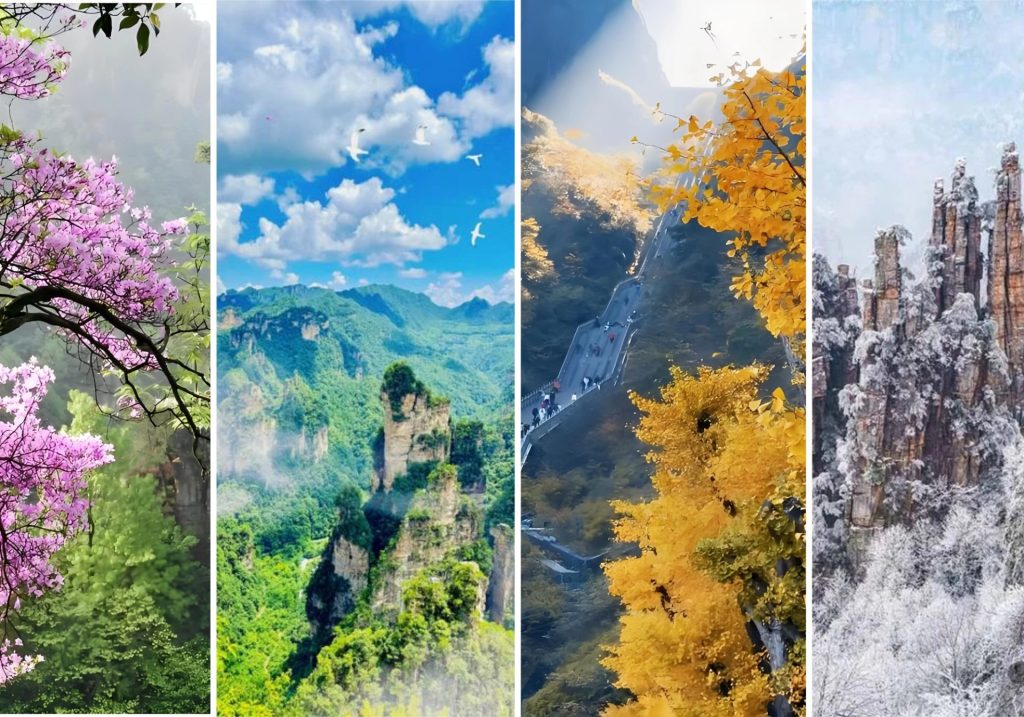
Spring and fall (April–May and September–October) are the best times to visit. Temperatures range from 15–25°C, the weather is warm and dry, and visibility is good, allowing for a clear view of the peak forests. The sea of clouds in the fall is particularly spectacular; when the sky clears after rain, mist swirls among the peaks, creating a scene straight out of a fairy tale.
Summer (June–August) is the peak season. It is hot and humid, and fog often obscures the view. This period also coincides with China’s summer vacation and public holidays, resulting in extremely high tourist volumes; wait times for the Bailong Elevator may exceed three hours.
Winter (December–February) sees fewer tourists and lower prices; if you’re lucky, you might even encounter snowy scenery. January is the coldest month, with temperatures ranging from just 5–10°C; some cable cars may be closed for maintenance. If you’re sensitive to the cold, choose your visit carefully.
Avoid Chinese public holidays: the May Day holiday (around May 1), the National Day holiday (around October 1), and summer vacation (July–August). During these times, Zhangjiajie is packed with people, which can significantly detract from your experience.
Transportation: How to Get to Zhangjiajie
Flying to Zhangjiajie
Zhangjiajie Hehua International Airport (DYG) currently operates 12 international and regional routes. There are direct flights from Seoul and Busan; flights from Europe and the United States typically require a layover in Beijing, Shanghai, Guangzhou, or Hong Kong.
The airport now offers a 30-minute fast-track immigration process. A taxi ride from the airport to the Wulingyuan Scenic Area costs approximately 65–90 yuan and takes 30–50 minutes.
Traveling to Zhangjiajie by High-Speed Rail
Take a direct high-speed rail from major Chinese cities:
| Departure City | Travel Time to Zhangjiajie |
| Changsha | Approx. 3 hours |
| Chongqing | Approx. 4 hours |
| Guangzhou | Approx. 6 hours |
| Shanghai/Beijing | Approx. 8–10 hours |
Zhangjiajie has two main train stations: Zhangjiajie Station (for conventional trains) and Zhangjiajie West Station (for high-speed rail). A taxi ride from Zhangjiajie West Station to the Wulingyuan Scenic Area costs approximately 45–60 yuan and takes about 30 minutes.
Where to Stay for the Most Convenient Access from the Airport/Train Station to the Scenic Area
This is very important: The entrance to Zhangjiajie National Forest Park is in Wulingyuan Town, not in downtown Zhangjiajie. After getting off the plane or train, head straight to Wulingyuan Town to stay—do not stay in downtown Zhangjiajie.
- Taxi from the airport to Wulingyuan: 65–90 yuan, 30–50 minutes
- Taxi from Zhangjiajie West Station to Wulingyuan: 45–60 yuan, about 30 minutes
- Minibuses to Wulingyuan depart from the city bus station: 12–15 yuan, about 1 hour
My recommendation: Take the cruise for the outbound trip (Guilin → Yangshuo, traveling downstream), and take the high-speed rail for the return trip (Yangshuo → Guilin, traveling upstream). The cruise offers views of the Li River’s most scenic stretch (Yangdi–Xingping), which showcases the most iconic scenery of the entire Guilin landscape.
Where to Stay: Two Areas, Two Experiences
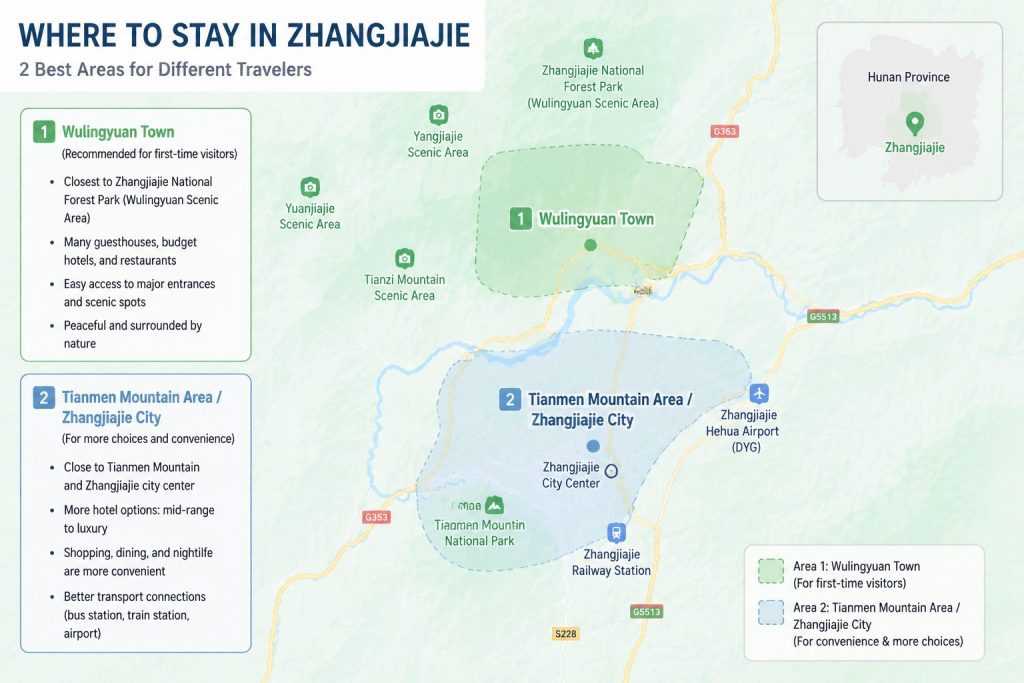
Area 1: Wulingyuan Town (Recommended for First-Time Visitors)
This is the closest and most convenient area to the National Forest Park. The East Gate (Landmark Gate) is right in town, and the park entrance is within walking distance. The town offers a full range of dining and shopping options, and most foreign tourists stay here.
Recommended Hotels:
- Vienna International Hotel (Zhangjiajie National Forest Park Branch) — Opening in 2025, this mid-to-high-end brand under the Jinjiang Hotels Group features rooms ranging from 30 to 45 square meters, with panoramic floor-to-ceiling windows overlooking the mountain scenery of Wulingyuan’s core scenic area. The hotel offers a smart voice-controlled system throughout the room and is equipped with “Vienna Deep Sleep Mattresses.” It’s a 5-minute walk to Baofeng Lake Scenic Area and about a 29-minute drive from Zhangjiajie West Station. Price range: 400–700 yuan per night.
- Upscale Boutique Hotels: There are several mid-to-high-end resort hotels in and around Wulingyuan Town, some of which feature infinity pools and scenic restaurants. Price range: 800–1,500 yuan per night.
Area 2: At the Foot of Tianmen Mountain / Zhangjiajie City Center
If your itinerary includes Tianmen Mountain, it’s more convenient to stay near the Tianmen Mountain Cable Car Station.
Recommended Hotels:
- Hilton Garden Inn Zhangjiajie Tianmen Mountain—Newly opened in July 2025, this Hilton Group property is a 4.0 “Blossom Edition” hotel located at the foot of the Tianmen Mountain Scenic Area. It is about 3 kilometers from the Tianmen Mountain Cable Car Station, within walking distance of Hehua Airport, about 4 kilometers from the train station, and 10 kilometers from Zhangjiajie West Station. The hotel offers international-standard services, including a Western-style breakfast, a fitness center, and meeting rooms. Price range: 500–900 yuan per night.
Zhangjiajie National Forest Park (Wulingyuan): Core Scenic Area
This is the heart and soul of Zhangjiajie. Zhangjiajie National Forest Park is China’s first national forest park, renowned for its unique quartz sandstone peak forest landscape and designated as a UNESCO World Natural Heritage Site. The “Hallelujah Mountains” in the movie Avatar were inspired by this very place.
Ticket Information
- 4-Day Pass: Approximately 495 yuan (includes shuttle buses within the park); valid for 4 consecutive days with unlimited entry and exit
- During peak season, tickets must be purchased online in advance (available on Trip.com, WeChat Mini Programs, or the official website)
- When purchasing tickets, we recommend choosing a multi-ride package that includes the cable car and Bailong Elevator; otherwise, you’ll be limited to a few rides and will need to pay extra on-site for additional trips
- Upon entry, your ticket will be linked to your passport and biometric information
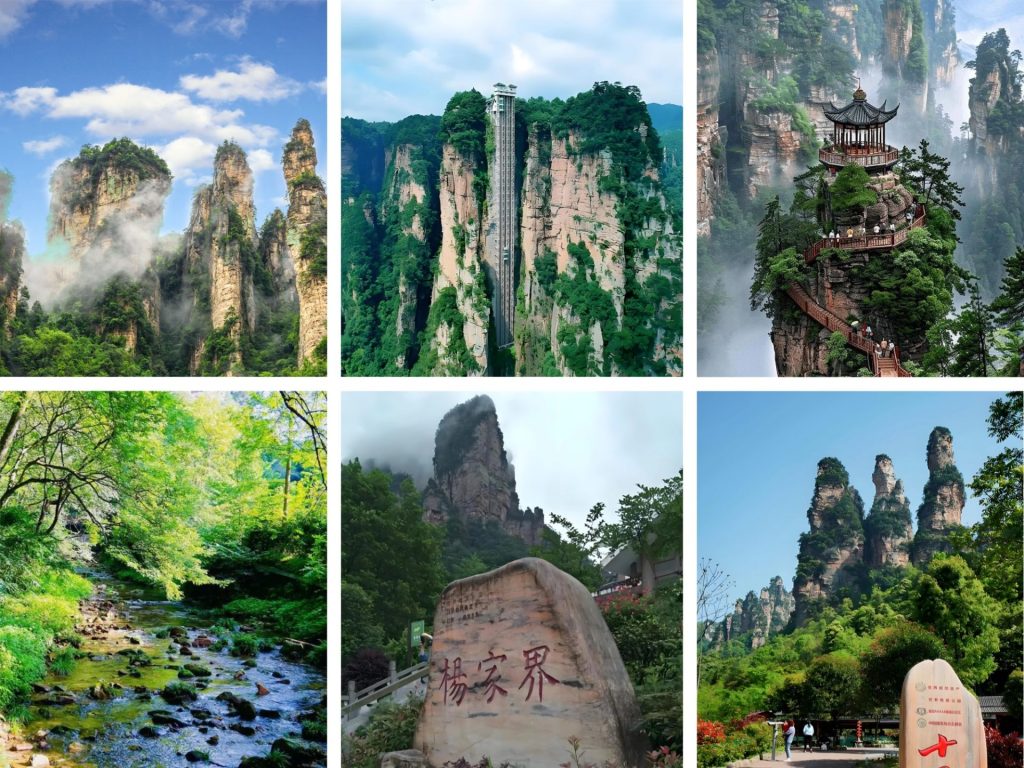
Six Major Attractions
Yuanjiajie — “Avatar Mountain”
This is the park’s most iconic area and the inspiration behind Avatar. The landmark “Hallelujah Mountain” is a towering quartz sandstone pillar whose base has been eroded to create an appearance of floating in mid-air; when shrouded in mist, it resembles a mountain suspended in the sky. Visitors can see what the “floating mountain” from the movie looks like in real life from the observation deck.
Bailong Elevator—The World’s Tallest Outdoor Elevator
With a vertical height of 330 meters, it takes just over a minute to travel from the base to the summit, making it the world’s tallest outdoor glass elevator. Looking out from inside the elevator, the rock walls rush past at high speed—a truly breathtaking sight. A word of advice: During peak season, wait times can exceed two hours, so it’s best to go as soon as the park opens.
Tianzi Mountain — “The King of Peak Forests”
Famous for its sea-of-clouds scenery, especially after rain when the sky clears or at dawn, the mist surges among the peaks like ocean waves. Take the Tianzi Mountain Cable Car (about 6 minutes) to the summit, where multiple observation decks offer panoramic views of thousands of quartz sandstone pinnacles.
Jinbian Stream—”The Most Beautiful Canyon”
Stretching 7.5 kilometers, this gentle walk along the stream requires no uphill climbing. It’s perfect for relaxing your legs after a day of hiking. Along the way, you’ll encounter the stream, ancient trees, and wild macaques. Please note: the monkeys may try to snatch food, so keep your food bags hidden and never feed them.
Yangjiajie — “For Hikers Only”
This area is more pristine and less crowded than others. Its highlights include the “Natural Great Wall”—a winding wall of sandstone peaks—and precarious viewpoints such as “One Step to Heaven.” It requires good physical stamina and is best suited for avid hikers.
Ten-Li Gallery
Take a small train or walk through the canyon to admire the iconic rock formations on either side—such as the “Three Sisters Peaks” and the “Herbalist.” A one-way ticket for the small train costs approximately 7.08 Singapore dollars (about 38 yuan).
Tianmen Mountain National Park: Glass Walkway and 99 Bends
Tianmen Mountain is another world-class scenic spot in Zhangjiajie, located about a 40-minute drive from Zhangjiajie National Forest Park. It’s usually best to set aside a full day to visit.
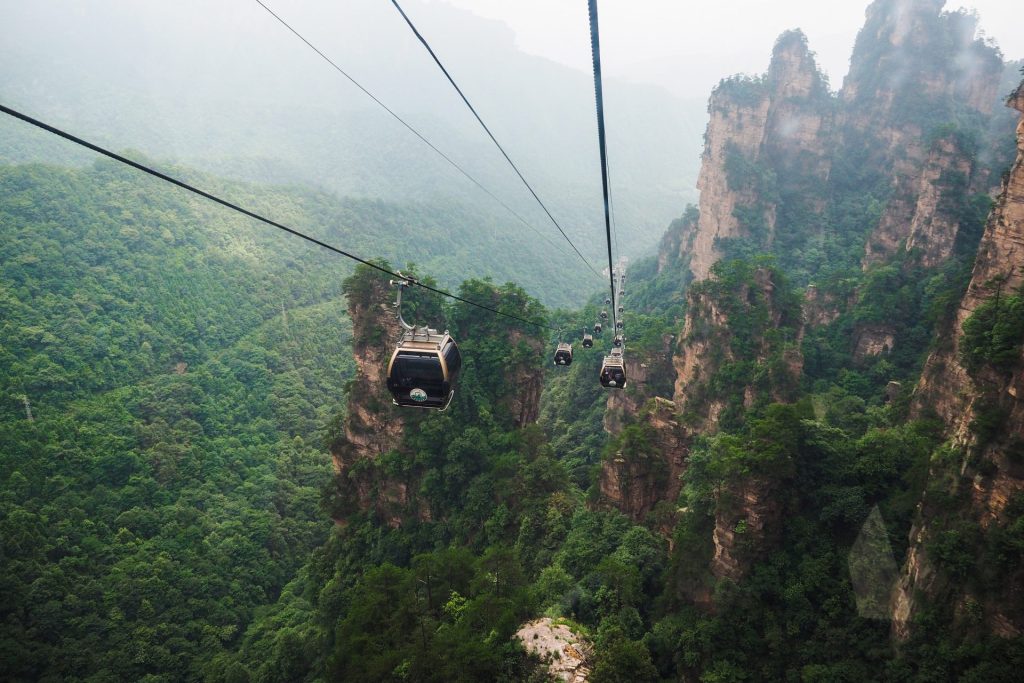
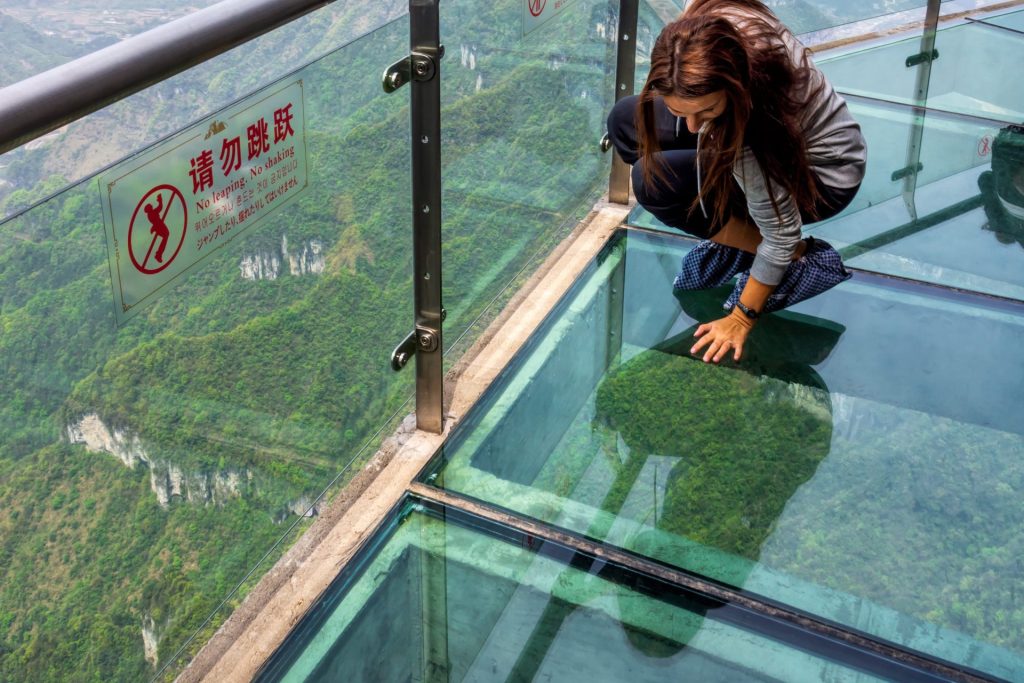
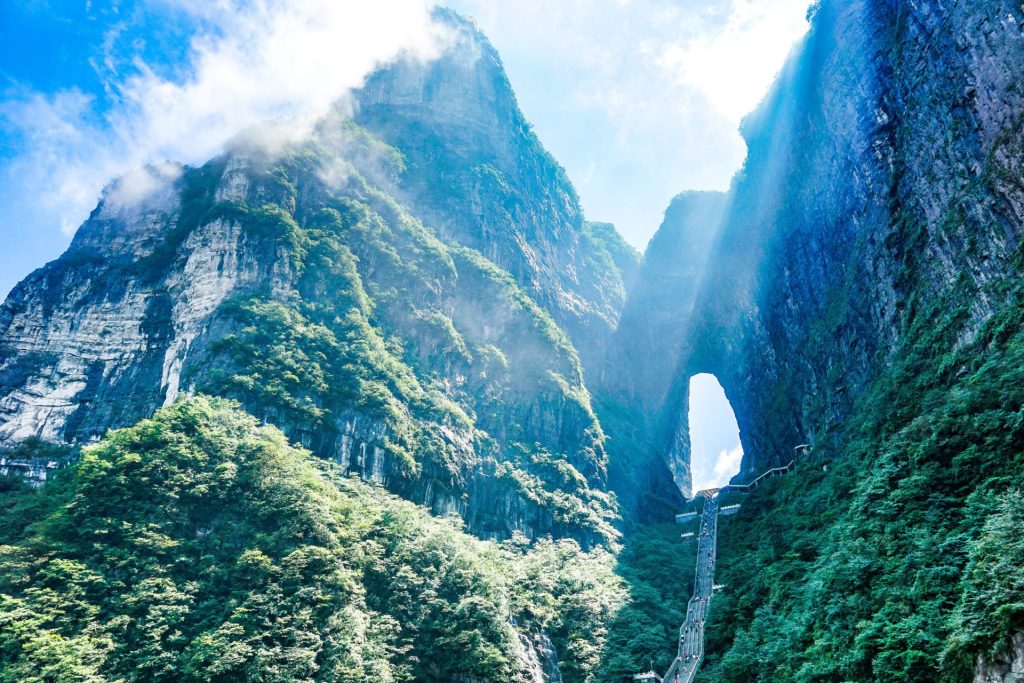
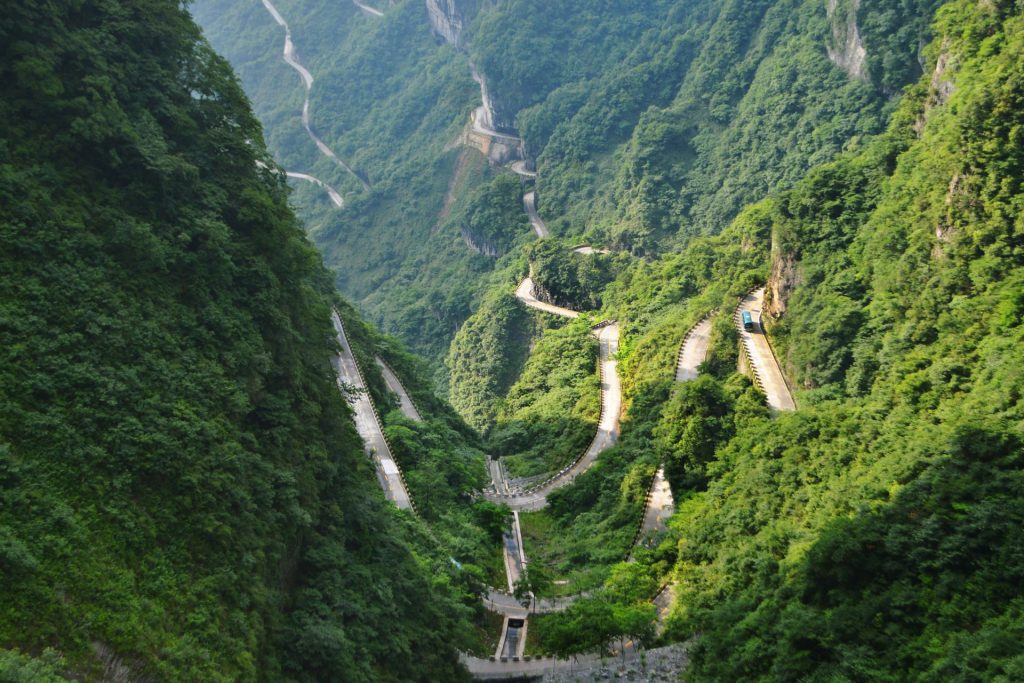
Four Must-Try Experiences:
The World’s Longest Cable Car Ride (7,455 meters) — This ride takes you directly from downtown Zhangjiajie to the mountaintop in about 30 minutes. The view from the cable car, as the city gradually gives way to the surrounding mountains, is truly breathtaking.
Glass Walkway — A transparent glass walkway suspended at the edge of a cliff, with a bottomless abyss right beneath your feet. Not recommended for those with a fear of heights, but perfect for those looking to test their courage.
Tianmen Cave — A natural cave in the mountaintop that, when viewed from afar, resembles a gateway to the heavens. “Mist Rising from Tianmen” is a famous local natural wonder.
The 99-Turn Road to Heaven — A winding mountain road leading from the foot of the mountain to Tianmen Cave. The sheer density of its curves is breathtaking; taking the scenic area shuttle up the mountain offers a unique experience.
Classic Itinerary: 3-Day Highlights Edition
The following itinerary is ideal for first-time foreign visitors with limited time.
Day 1: Yuanjiajie + Tianzi Mountain
- 7:30: Enter the park through the East Gate (Wulingyuan Landmark Gate) as soon as it opens to avoid the crowds
- Take the park’s eco-friendly shuttle to the Bailong Elevator Station
- Take the Bailong Elevator up to Yuanjiajie (the world’s highest outdoor elevator)
- Explore the Yuanjiajie Viewing Platform, Hallelujah Mountain, and the “First Bridge Under Heaven”
- Take the park’s eco-friendly shuttle to Tianzi Mountain
- View the sea of clouds and panoramic peaks from the Tianzi Mountain Viewing Platform
- Take the Tianzi Mountain Cable Car down the mountain and exit the park through the East Gate
Day 2: Jinbian Stream + Ten-Li Gallery
- 9:00: Enter the park through the South Gate (or take a shuttle from the East Gate to Shuirao Simen)
- Hike 7.5 kilometers along Jinbian Stream (flat terrain, approx. 2.5 hours), enjoying the stream views and spotting wild macaques
- Upon reaching Shuirao Simen, take the mini-train to tour the Ten-Li Gallery
- In the afternoon, re-enter the park to explore any areas missed the previous day
- Dine on Hunan cuisine in Wulingyuan Town in the evening
Day 3: Tianmen Mountain
- 8:30: Arrive at the Tianmen Mountain Cable Car Station (in downtown Zhangjiajie)
- Take the world’s longest cable car up the mountain (30 minutes)
- Walk along the Glass Walkway and the Guigu Walkway
- Take the escalator through the mountain down to Tianmen Cave
- Take the scenic area eco-friendly shuttle bus down the mountain along the 99 Bends
- In the afternoon, return home or continue exploring the Zhangjiajie Grand Canyon Glass Bridge (if time permits)
What to Eat? Three Hunan Specialties
Hunan Province, where Zhangjiajie is located, is famous for its spicy cuisine. Unlike Sichuan cuisine, Hunan cuisine features a spiciness that is more direct and intense.

- Sanxiaogu—Zhangjiajie’s signature dish. Pork tripe, beef tripe, and pork feet are stewed together in a single pot with chili peppers and spices. The portions are generous, making it perfect for sharing.
- Tujia Smoked Pork—The Wulingyuan area is home to the Tujia ethnic group, and smoked pork is a traditional Tujia dish. Slices of smoked pork belly are stir-fried with garlic chives or chili peppers, filling the air with a rich, savory aroma.
- Fish Head with Chopped Chili—A famous Hunan dish. The fish head is covered with red chopped chili and steamed until tender, resulting in a dish that’s both fresh and spicy. The fish meat is tender, but be careful of the bones when eating.
Where to Eat: Wulingyuan Town is packed with restaurants where you can enjoy good local cuisine for 50–80 yuan per person. There are snack stalls inside the park (serving noodles, dumplings, corn, etc.) with reasonable prices, though the selection is limited.
Tips for Bringing Your Own Food: Since dining options inside the park are limited and slightly expensive, we recommend having a hearty breakfast before entering and bringing some energy drinks and chocolate.
Payment and Language
Zhangjiajie was recently awarded the “Exemplary Case of Optimizing Inbound Tourism Services” certificate for 2025, and its service system for foreign tourists ranks among the best in China’s tourist attractions.
Payment:
- All 3,240 key merchants across the city now accept foreign-issued credit and debit cards via POS terminals.
- Users can scan a QR code to pay by linking their foreign-issued cards to Alipay or WeChat Pay.
- There are 25 foreign currency exchange agencies and self-service currency exchange machines located throughout the city’s central districts.
- Additionally, the “Hui Wallet” service—a collaborative effort involving banks, currency exchange agencies, travel agencies, and tour guides—makes it convenient to exchange small denominations of cash.
Language:
- Through partnerships with local universities, the area has trained 1,088 tour guides fluent in Korean, Thai, and Russian.
- The scenic area’s guided tour system offers comprehensive coverage in multiple languages, including Chinese, English, and Korean.
- Multilingual signage is ubiquitous throughout the scenic area, and French tourists have noted that “staff can communicate fluently in English.”
- However, staff at small street-side restaurants and taxi drivers generally do not speak English, so it’s still a good idea to have a translation app on hand.
Emergencies
| Situation | What to Do |
| Call the Police | Dial 110. There are English-speaking operators, but you may need to wait to be transferred. |
| First Aid/Ambulance | Call 120. |
| Lost and Need Directions | Write the Chinese name of your destination on your phone and show it to a passerby. Young people generally speak a little English, but don’t expect to communicate fluently. |
| Lost Passport | File a police report to obtain a proof of loss, then go to your country’s Consulate General in Changsha or Guangzhou to apply for a replacement. |
| Need to see a doctor | There is a district hospital in Wulingyuan; in case of an emergency, we recommend going to Zhangjiajie Municipal People’s Hospital. For serious conditions, you will need to travel to Changsha (a 3-hour high-speed rail ride). |
Special Reminder:
- Wild Macaques: There are many monkeys in the scenic area, and they may snatch food and bags. Do not leave food bags exposed, and do not feed the monkeys.
- Avoid “Roadside Tour” Scams: Do not purchase “cheap tours” near the train station; these are often shopping scams. Purchase tickets only at official ticket offices or through the official app.
- Wear the Right Shoes: You’ll walk an average of 20,000 steps per day, and some sections feature steep steps. Comfortable hiking boots are an absolute must.
- Dress in Layers: The weather in the mountains changes quickly—it’s cool in the morning, hot at noon, and may rain in the evening.
- Bring Insect Repellent: There are many mosquitoes and other insects in forested areas.
A 3-Day Streamlined Itinerary for Zhangjiajie National Forest Park
If you only have time to explore the Forest Park and won’t be visiting Tianmen Mountain, here’s a streamlined itinerary:
Day 1: Enter through the East Gate → Bailong Elevator → Yuanjiajie (Hallelujah Mountain) → Tianzi Mountain (Sea of Clouds Viewing Platform) → Descend via the Tianzi Mountain Cable Car
Day 2: Enter through the South Gate → Hike along Jinbian Stream (7.5 km of flat terrain) → Take the Ten-Li Gallery Mini-Train → Free time in the afternoon to explore additional sights
Day 3: Yangjiajie (for hikers only; Natural Great Wall, One-Step-to-Heaven) or Huangshizhai (“If you haven’t been to Huangshizhai, you haven’t truly been to Zhangjiajie”), return home in the afternoon
A few final thoughts
The mountains in Zhangjiajie look very different. They aren’t as graceful as those on Mount Huangshan, nor as rugged as those on Mount Huashan—here, the mountains seem to grow one by one from the ground, like a forest of stone, reminiscent of the world in Avatar. Standing on the viewing platform at Yuanjiajie, watching those seemingly suspended stone pillars appear and disappear amidst the sea of clouds, you’ll realize that those scenes in the movie weren’t just figments of the imagination—people have actually been here, been awestruck, and then brought it to the big screen.
Zhangjiajie needs no embellishment. Once you’ve been there, you’ll find that the phrase “real-life Pandora” is—not an exaggeration at all.
If you’d like a carefully tailored itinerary for a worry-free trip, feel free to contact us! Bespoke China Travel creates personalized travel experiences that reveal the real China — its culture, landscapes, cuisine, and people — through thoughtfully designed journeys tailored to every traveler.