
Traveling by Train in China
China boasts the world’s largest, most sophisticated rail network. Trains are cheap, convenient for overseas visitors, and ideal for seeing China’s sweeping scenery and cutting-edge infrastructure. Whether you’re taking high-speed intercity rides or cross-country overnight sleepers, this plain-English guide covers all you need to know about China’s trains.
Updated June 24, 2026

Popular High-Speed Train Routes
China Train RoutesWhy Travel by Train in China?
Traveling by train in China offers several advantages, especially for first-time visitors:
- Fast and efficient: High-speed trains connect major cities at speeds up to 350 km/h (217 mph).
- Wide coverage: From Beijing and Shanghai to Guilin, Xi’an, Chengdu, and even remote regions.
- Comfortable and safe: Clean stations, modern trains, and excellent safety records.
- Environmentally friendly: Trains are a greener option compared to domestic flights.
- City-center to city-center: Most stations are closer to downtown areas than airports.
For many travelers, trains are often the most convenient way to get around China.
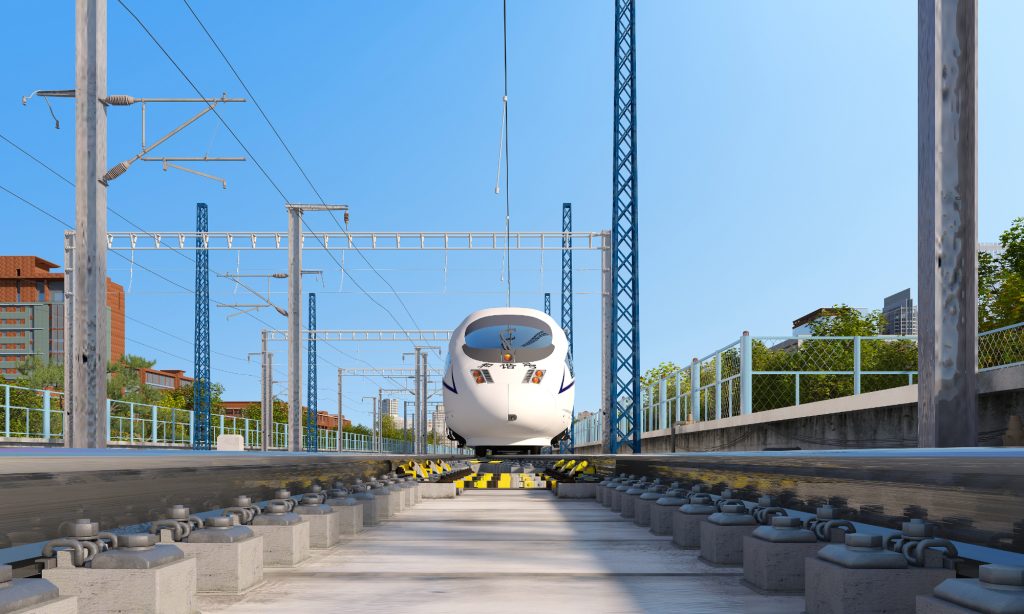
Types of Trains in China
China’s trains are categorized by letters. Understanding them helps you choose the right option.
High-Speed Trains (G, D, C Trains)
- G Trains: The fastest and most modern high-speed trains.
- D Trains: Slightly slower but still very fast and comfortable.
- C Trains: Short-distance intercity high-speed trains.
Best for: Beijing–Shanghai, Shanghai–Hangzhou, Xi’an–Chengdu, Guangzhou–Shenzhen.
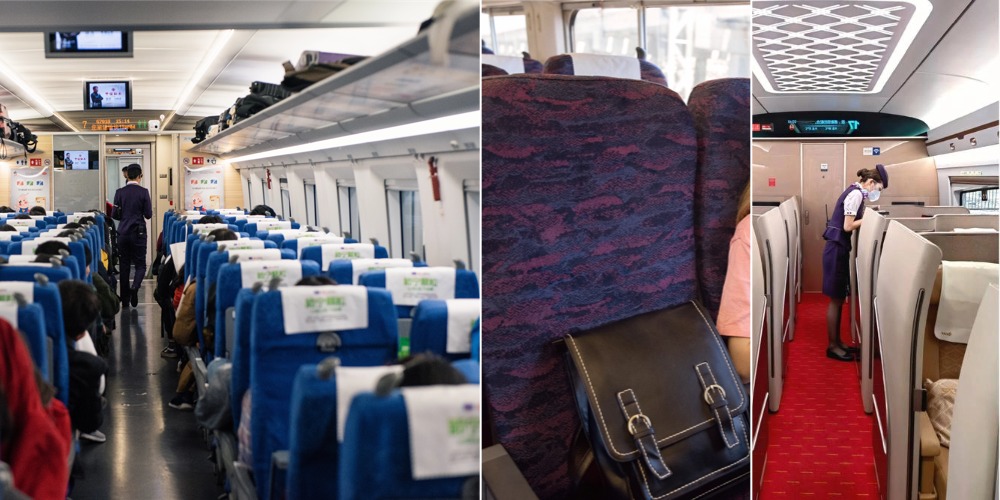
Seating options:
- Second Class (recommended, very comfortable)
- First Class (more legroom)
- Business Class (luxury-level seating)
Conventional Trains (Z, T, K Trains)
- Z Trains: Non-stop or limited-stop overnight trains.
- T Trains: Express trains with fewer stops.
- K Trains: Slower, budget-friendly trains.
Best for: Long-distance travel, overnight journeys, regions not served by high-speed rail.
Sleeper options:
- Soft Sleeper (4-berth cabin, most comfortable)
- Hard Sleeper (6-berth, basic but practical)
- Hard Seat (not recommended for long trips)
Some seats↓
How to Buy Train Tickets in China
Taking a train in China is very different from taking a train in Western countries. The article below may help make your journey smoother and more convenient.
Foreign travelers can buy train tickets in several ways:
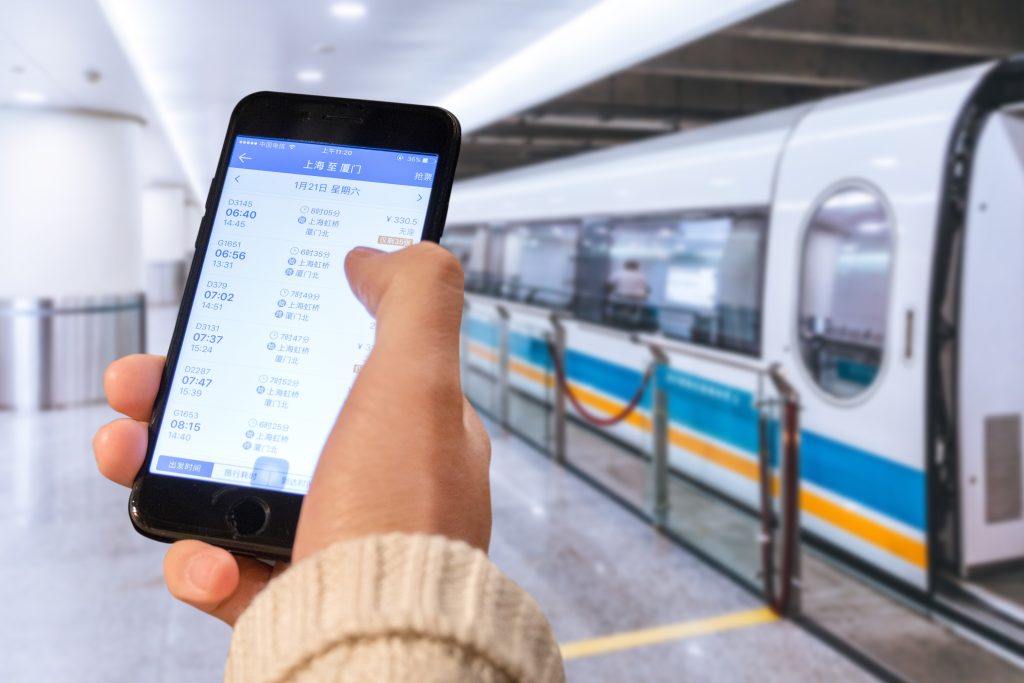
1. Online (Recommended)
- Official China Railway website (English version available)
- Reputable third-party platforms that support foreign passports
| Category | Platform | Key notes |
|---|---|---|
| Official | China Railway 12306 |
Official English ticketing site. Accepts Visa, Mastercard, and JCB. Email signup only — no Chinese phone number needed. No booking fees.
Visa / MC / JCB
No fee
Email signup
|
| Official | China State Railway — Corporate Site |
Corporate info site only. Company profiles, news, and policy updates. No ticket booking.
Info only
No ticketing
|
You’ll need:
- Your passport
- Travel date and city names (English is usually accepted)
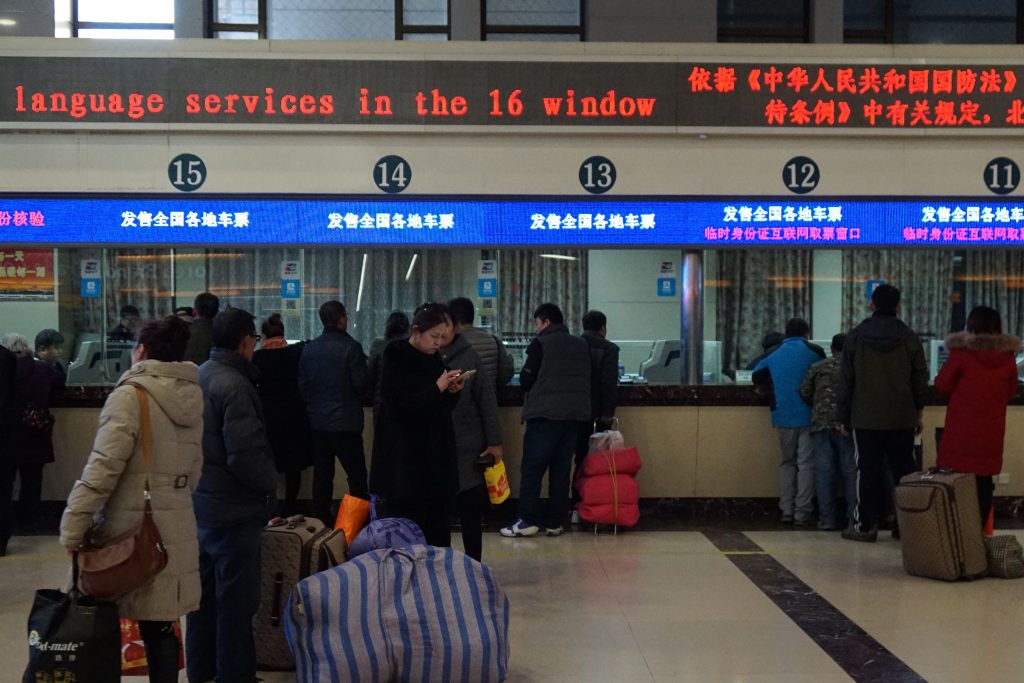
2. Train Station Ticket Counters
- Bring your passport
- English service is available in major cities, but is limited elsewhere
3. Through a Travel Agency
- Ideal if you want tickets bundled with tours, hotels, or guides
- Helpful during peak seasons or national holidays
Using Your Passport Instead of a Paper Ticket
Good news: China is largely paperless now.
- Your passport acts as your ticket
- Scan your passport at the ticket gates
- No need to print tickets in most stations
This makes train travel much easier for international visitors.
What to Expect at Chinese Train Stations
Chinese train stations are more like airports:
- Security check before entering
- Clear signage (Chinese + English in major cities)
- Waiting areas organized by train number
- Boarding starts about 15–20 minutes before departure
Tip: Arrive at least 30–45 minutes early, especially in large stations like Beijing South or Shanghai Hongqiao.
Luggage Rules on Trains in China
There is no strict weighing process like at airports, but general guidelines apply:
- Carry-on luggage is common
- Large suitcases are allowed if manageable
- Overhead racks and luggage spaces near car entrances are available
High-speed trains are particularly luggage-friendly.
Food and Facilities Onboard
- Dining cars are available on some long-distance trains
- Snack carts and hot water dispensers are on most trains
- High-speed trains sell boxed meals (or bring your own food)
Restrooms are clean and modern, especially on high-speed trains.
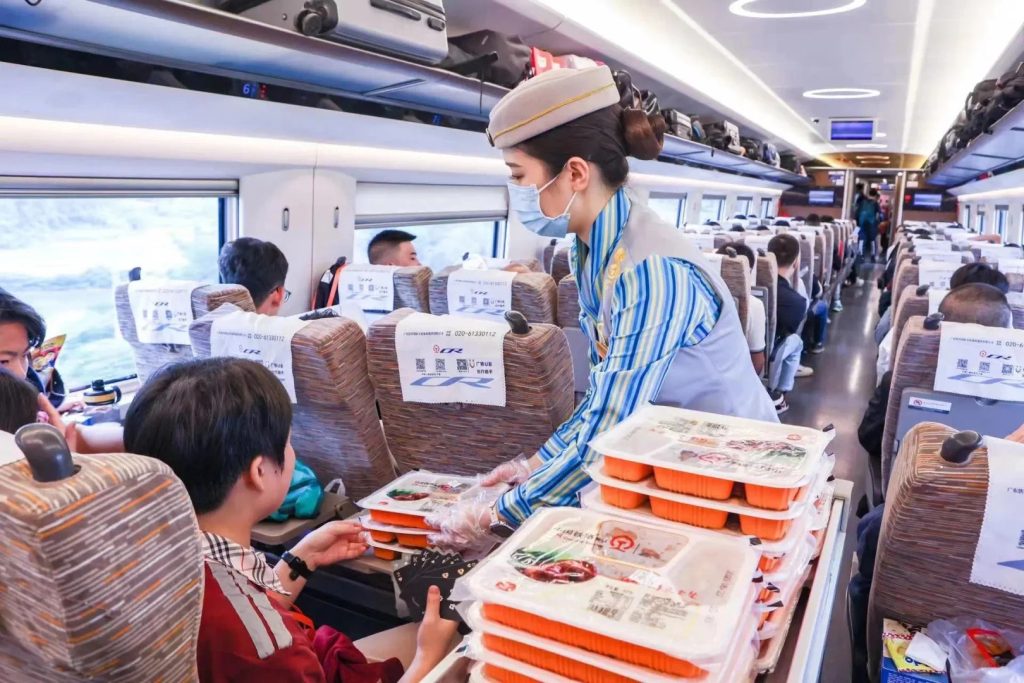
Is Train Travel in China Foreign-Friendly?
Yes — especially on high-speed routes and popular tourist lines.
- Staff may not speak fluent English, but the signage is clear
- Apps and booking platforms simplify the process
- Trains are punctual and well-organized
With basic preparation, train travel in China is smooth even for first-time visitors.
Trains vs Flights: Which Is Better?
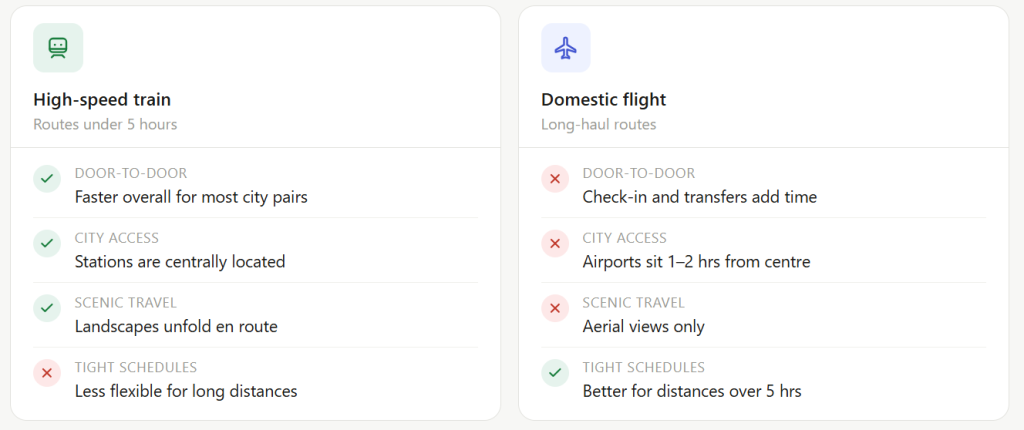
💡For most classic China routes, high-speed rail is the more practical — and more rewarding — way to travel.
Final Tips for Traveling by Train in China
- Book tickets early during holidays (Chinese New Year, National Day)
- Double-check station names — cities may have multiple stations
- Keep your passport handy at all times
- Choose high-speed trains whenever possible
Final Thoughts
China’s train system is one of the best in the world — fast, reliable, and surprisingly easy for international travelers. Whether you’re hopping between megacities or crossing regions overnight, trains offer a stress-free way to explore China.
If you’re planning a customized China itinerary, combining train travel with private transfers and guided tours can give you the best of both worlds: efficiency and comfort.
Top China Railway Stations
The top 20 railway stations are strategically located in either economic or political centers, as well as renowned tourist cities. These stations serve as crucial hubs for high-speed train transfers, ensuring seamless connectivity and convenient travel.