
Guilin & Yangshuo Travel Guide
This guide lists all the issues that foreign tourists most commonly run into. How to get from Guilin to Yangshuo, which section to choose for bamboo rafting, and where to eat beer-braised fish—it provides specific instructions for every step.
Updated June 23, 2026
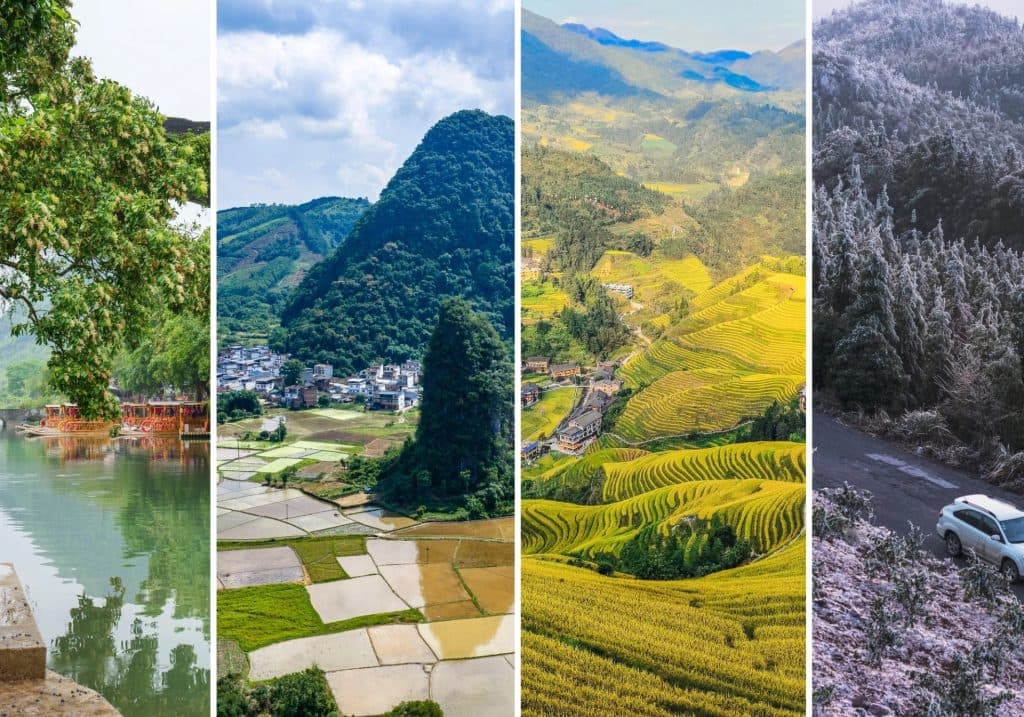
Guilin and Yangshuo were among the first places in China to open up to foreign backpackers. Foreigners have been living long-term on Yangshuo’s West Street since the 1980s, and the area is known as the “Global Village.” These two cities are very close to each other—a 20-minute ride by high-speed rail or a 4-hour cruise down the Li River—and the vast majority of tourists enter via Guilin and exit via Yangshuo, traveling south along the Li River.
This guide combines the two destinations into a complete itinerary. If you’re only interested in the Yangshuo section, there’s a condensed table of contents at the bottom of the article that you can use to jump to that section.
If you only have 10 minutes, read these 6 things first
Visa: Apply for a tourist visa (L visa) at least 4 weeks in advance. You can check the official website of the Chinese embassy in your country for the latest requirements and application steps. If you prefer a smoother process, Bespoke China Travel also supports our travelers with visa guidance, including invitation letters and step-by-step application assistance, helping you avoid delays and prepare everything correctly for your China trip. Contact us→
VPN: One thing I always tell first-time visitors to China is to think about internet access before they arrive. Popular services such as Google, Gmail, WhatsApp, Instagram, Facebook, and YouTube are restricted in mainland China, so it’s worth planning ahead before your trip.
SIM Card: For most travelers, the easiest option is a travel data SIM card or eSIM that works immediately after arrival. Many plans now include access to international apps and websites, so you can stay connected without any complicated setup.
When I help travelers plan their China trips, I usually arrange a 30-day data SIM card with 10GB of data. It’s a data-only card with no phone number, calls, or SMS, but for most visitors that’s all you need. Simply install it, turn on your phone, and you’ll be online as soon as you arrive in China.
Want to learn more? → Read my complete guide to SIM cards and eSIMs for China travel.
Payment: Download Alipay or WeChat Pay and link a Visa or Mastercard credit card. Yangshuo’s West Street has been designated a “convenient payment tourism and leisure zone,” with all major merchants accepting foreign credit cards. Bring 500–1,000 yuan in cash just in case; you may need it at street-side stalls.
Maps and Navigation: Google Maps doesn’t work in China. If you’re using an iPhone, Apple Maps works fine and includes public transit and subway navigation. Android users can download Baidu Maps, but the interface is in Chinese only, so you’ll need a bit of patience. Neither Guilin nor Yangshuo is very large, so most attractions can be reached on foot, by bike, or by taxi.
Weather Forecast: Guilin experiences frequent rain, so be sure to check the weather forecast a week before your trip. On rainy days, the waters of the Li River turn yellow, which can detract from the scenic view.
When is the best time to visit?
Guilin’s landscapes are renowned for the “misty and rainy Li River,” and the scenery varies completely depending on the season.
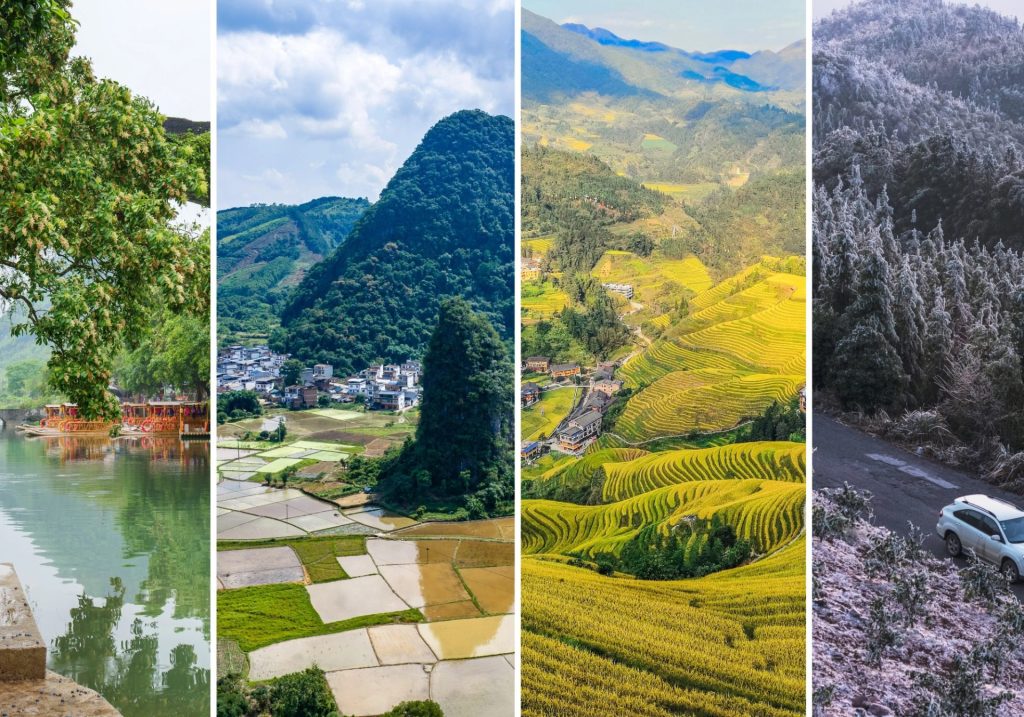
Spring and fall (March–May and September–November) are the best times to visit. Temperatures range from 15–25°C, rainfall is just right, the Li River’s water level is moderate, and the peak forests on both banks are reflected most clearly in the water. Rapeseed flowers bloom in spring, and rice fields turn golden in fall, offering the richest palette of colors.
Summer (June–August) is the high-water season on the Li River, making bamboo rafting the most thrilling experience. However, the weather is hot and humid, with a heat index above 35 degrees, and since summer is the rainy season, the river water turns yellow after heavy rains, which detracts from the scenic experience.
Winter (December–February) is cold, with temperatures ranging from 5 to 10°C, but most hotels have air conditioning with heating. There are fewer tourists in winter, and the Li River is often shrouded in a light mist, creating the most authentic “Misty Rain over the Li River” atmosphere.
Transportation: How to Get to Guilin and Yangshuo
Flying to Guilin
Guilin Liangjiang International Airport is the largest aviation hub in Guangxi, with direct flights from South Korea, Thailand, Malaysia, and Singapore. Flights from Europe and the United States typically require a layover in Beijing, Shanghai, or Guangzhou. The airport is about 30 kilometers from downtown Guilin; a taxi ride takes approximately 40–60 minutes and costs around 100 yuan. The airport shuttle to the city center costs 20 yuan and takes about 50 minutes.
High-Speed Rail to Guilin/Yangshuo
If traveling by high-speed rail from other cities in China:
| Departure City | Travel Time to Guilin | Travel Time to Yangshuo |
| Guangzhou | Approx. 2.5 hours | Approx. 2 hours |
| Hong Kong | Approx. 3.5 hours | Approx. 3.5 hours |
| Shenzhen | Approx. 3 hours | Approx. 2.5 hours |
| Shanghai | Approx. 8 hours | Approx. 8 hours |
Guilin to Yangshuo: A Comparison of Three Travel Options
| Option | Price | Time | Best for |
| Li River Cruise | Approx. 300 yuan/person | 4 hours | Those who aren’t in a hurry and want to see the best scenery along the Li River |
| High-Speed Rail | Approx. 30 yuan | 20 minutes | Those in a hurry with light luggage |
| Bus | Approx. 30 yuan | 1.5 hours | Those on a moderate budget |
My recommendation: Take the cruise for the outbound trip (Guilin → Yangshuo, traveling downstream), and take the high-speed rail for the return trip (Yangshuo → Guilin, traveling upstream). The cruise offers views of the Li River’s most scenic stretch (Yangdi–Xingping), which showcases the most iconic scenery of the entire Guilin landscape.
Guilin City Guide (2 Days)
It’s worth spending two days in downtown Guilin; visiting three places is enough. If you’re short on time, you can see everything in just one day.
Where to Stay: Around the Two Rivers and Four Lakes
Staying near the Two Rivers and Four Lakes scenic area is most convenient, as Elephant Trunk Hill and Zhengyang Pedestrian Street are within walking distance. Mid- to high-end hotels are concentrated along the Li River and around Shanhu Lake:
- Guilin Li River Grand Waterfall Hotel: Overlooking Shanhu Lake, with some rooms offering direct views of the Sun and Moon Twin Pagodas. The hotel features its own “Nine Heavens Milky Way” artificial waterfall, which is spectacular when illuminated at night. Price range: 600–1,000 yuan per night.
- Guilin Shangri-La Hotel: Located on the east bank of the Li River, it features a private riverside promenade, and guests can rent bicycles on-site to cycle along the river. Price range: 800–1,500 yuan per night.
- Bai Gongguan Hotel: A Republican-era-style hotel on the shores of Rong Lake, it is quiet and stylish, with a significant number of foreign guests. Price range: 500–900 yuan per night.

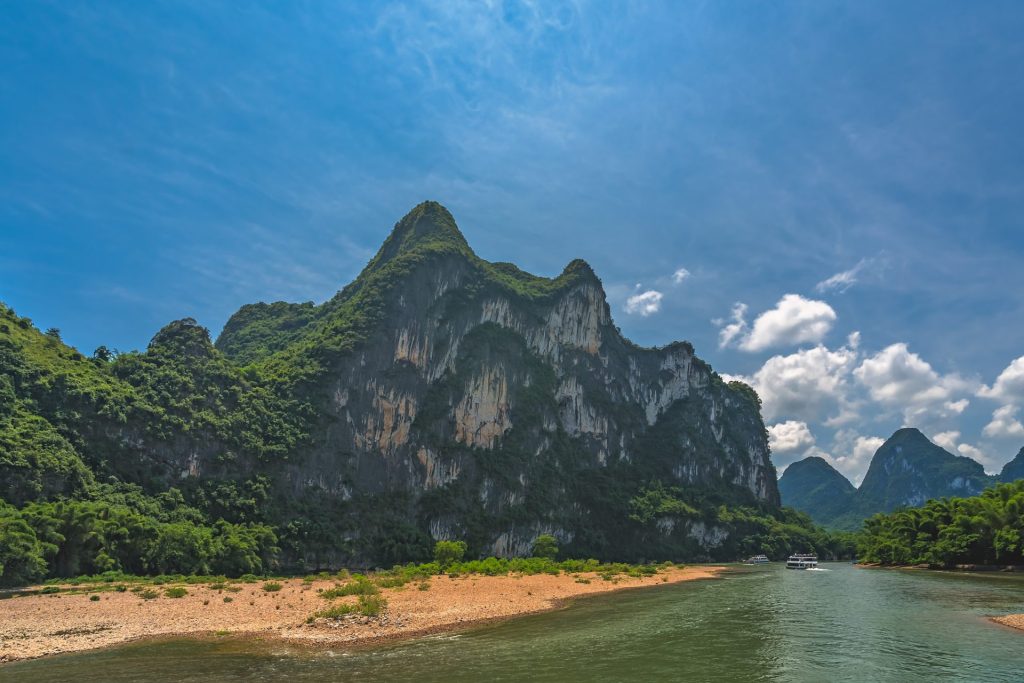
Day 1: Elephant Trunk Hill + Prince Jingjiang’s Mansion + Night Cruise on the Two Rivers and Four Lakes
9:00 a.m.: Elephant Trunk Hill.
This is Guilin’s undisputed city landmark. The mountain’s shape closely resembles an elephant drinking water by the Li River, with a natural circular cave (Water Moon Cave) formed between its trunk and leg. It takes about 20 minutes to climb to the summit, where you can enjoy a bird’s-eye view of downtown Guilin and the Li River. Admission is 55 yuan. The best time to take photos is in the morning or evening, when the reflection of Elephant Trunk Hill in the water is clearest.
11:30 AM: Zhengyang Pedestrian Street.
It’s a 10-minute walk from Elephant Trunk Hill. This is the liveliest shopping street in downtown Guilin and a great spot for lunch. We recommend finding a Guilin rice noodle shop along the street to try a bowl of braised meat rice noodles—Tonglai Rice Noodles on Zhengyang Pedestrian Street is a long-standing local favorite. A bowl of soup noodles with braised beef and guoshao (fried pork rind) costs 10–12 yuan.
1:30 PM: Jingjiang Prince’s Mansion.
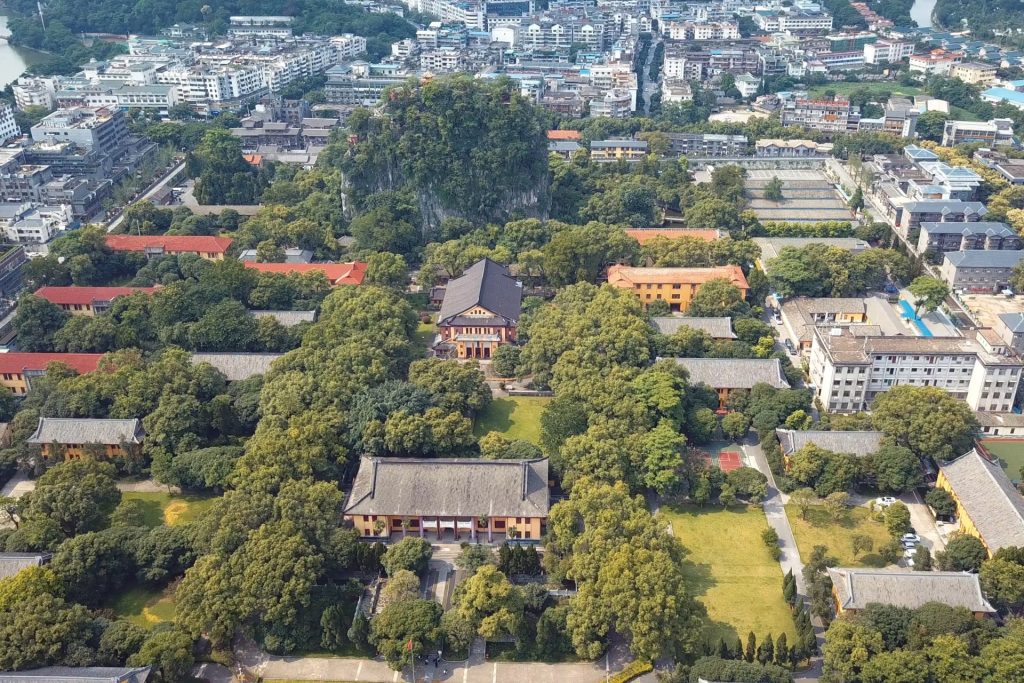
Located at the foot of Duxiu Peak in the heart of Guilin, this was the residence of a feudal prince during the Ming Dynasty and also served as the old campus of Guangxi Normal University. The centerpiece of the mansion is Duxiu Peak—the highest mountain in downtown Guilin. Climb to the summit (about 30 minutes) for a 360-degree panoramic view of the entire city. Inside the mansion, you’ll find a stone inscription reading “Guilin’s landscapes are the finest under heaven”; this is where the phrase originated. Admission is 100 yuan.
7:00 PM: Night Cruise on the Two Rivers and Four Lakes.
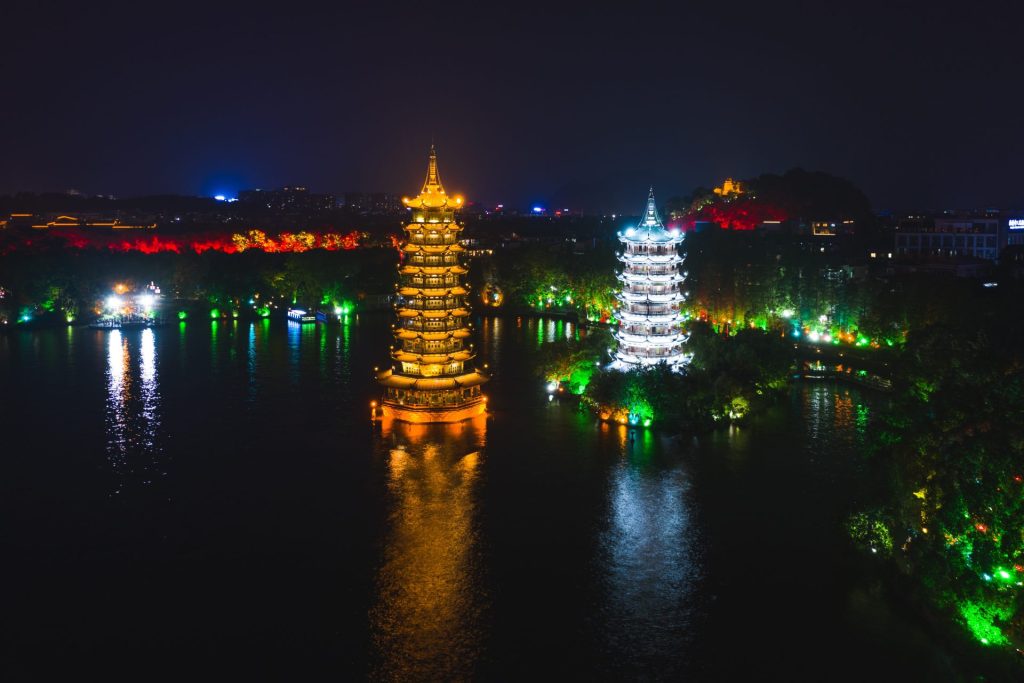
The Two Rivers and Four Lakes refer to the waterways encircling downtown Guilin—the Li River, Taohua River, Rong Lake, Shan Lake, Gui Lake, and Mulong Lake. The night cruise lasts about 1.5 hours by boat, passing nighttime landmarks such as the Sun and Moon Twin Pagodas, the Glass Bridge, and the Ancient South Gate. Audio commentary is available in four languages: Chinese, English, Japanese, and Korean. The ticket price is approximately 210 yuan per person. If you prefer not to take the boat, strolling along the lakeside is also a great option—especially near the Sun and Moon Twin Pagodas by Shanshu Lake, where their illuminated reflections on the water at night make for the most iconic Guilin nightscape photos.
Day 2: Guilin → Yangshuo (Li River Highlights Cruise)
8:30 a.m.: Board the boat at the Mopan Mountain Pier in Guilin and cruise downstream along the Li River.
This approximately 4-hour journey covers over 60 kilometers and showcases the Li River’s most spectacular scenery. The boat has two decks; the open-air upper deck is the best place to spend your time—with endless karst peaks stretching along both banks and the river’s emerald-green, crystal-clear waters, you’ll find yourself snapping photos nonstop.
Along the way, you’ll pass:
- Nine Horses Painting Mountain: A natural formation on the cliff face depicting nine galloping horses, located about 20 meters above the river surface; it is the Li River’s most famous pictorial landscape.
- Huangbu Reflection: The location that served as the backdrop for the 20-yuan banknote; the river’s surface is as wide and mirror-like as a lake, reflecting the seven peaks on the opposite bank.
- Xingping Ancient Town: The endpoint of the Li River’s most scenic stretch (cruise ships pass by but do not stop; you can visit on the return trip).
12:30 PM: Arrive at Yangshuo Pier.
It’s a 10-minute walk from the pier to West Street. First, drop off your luggage at the hotel, then officially begin your Yangshuo itinerary in the afternoon.
Yangshuo Travel Guide (4 Days)
Yangshuo County is small, but there’s plenty to do in the surrounding area. The itinerary below covers 4 days at a leisurely pace.
Where to Stay: Two Areas, Two Experiences
Area 1: West Street and Surroundings (Recommended for First-Time Visitors)
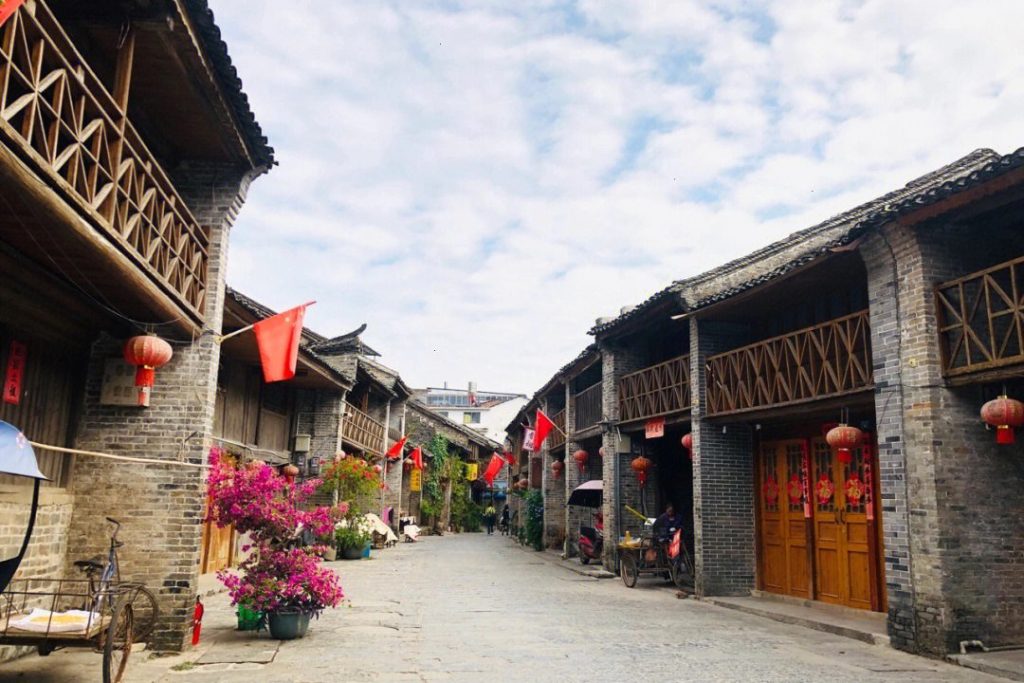
West Street is the heart and soul of Yangshuo, with a history spanning over 1,400 years. Since the 1980s, foreign backpackers have come here and never wanted to leave, gradually forming a unique community that blends Chinese and Western cultures. West Street now hosts over 300 shops and attracts an average of more than 1,000 international visitors daily.
Pros: Bars, restaurants, and cafes on West Street are right at your doorstep—lively and convenient in the evenings
Cons: The bar area can be noisy until midnight; if you’re sensitive to noise, choose a room not facing the street
Price Range:
- High-end: Yangshuo Sugar House—a design hotel converted from an old sugar factory, featuring industrial style and mountain-and-water views, 1,500–3,000 yuan/night
- Mid-to-high-end: Yangshuo Gege Tree Hotel—a mid-range boutique inn with a blend of Chinese and Western styles, 300–600 yuan/night
- Comfort: Standard guesthouses and homestays, 150–400 yuan per night
Area 2: Along the Yulong River (for those seeking “scenic views right outside their window”)
Pros: The Yulong River walking trail is right outside your door, and it’s not far from the Ten-Li Gallery, the Big Banyan Tree, and Moon Hill
Disadvantages: Far from West Street; a 15-minute taxi or bike ride
Price Range:
- Liangsu · Shili Jiangshan Hotel (Yulong River Branch) — Sky-high infinity pool, “Mirror of the Sky” photo spot, and direct panoramic views of the mountains and rivers. Offers free bicycle rentals. Prices range from approximately 600–1,000 yuan per night.
- Muye Mountain Villa Hotel (Qianguqing Branch) — Scheduled to open in 2025, this rustic mountain retreat in the wabi-sabi style features a massive rooftop outdoor pool and a restaurant with 270-degree panoramic valley views. Prices range from approximately 800 to 1,500 yuan per night.

Day 1 (First Day in Yangshuo): West Street + Master Chef’s Beer Fish + Bars
2:00 p.m.: Check into the hotel. If you’re staying near West Street, you can start exploring as soon as you drop off your luggage.
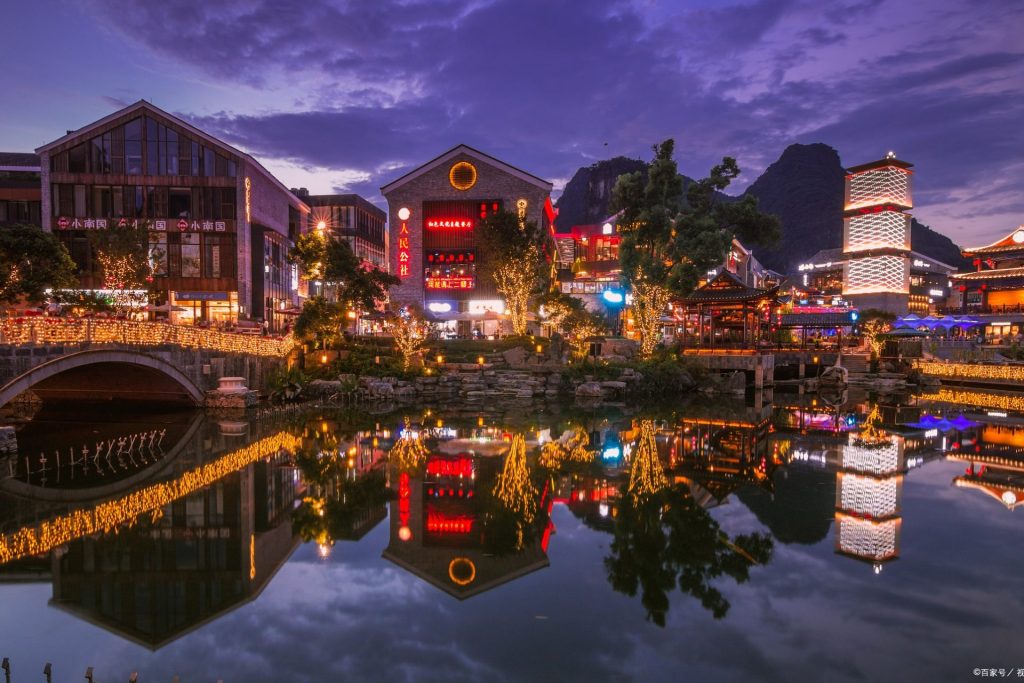
5:00 PM: First taste of West Street. West Street is completely different at night than during the day—by day, it has the feel of an old town street, quiet with few people, perfect for taking photos. It’s at night when it really comes alive.
7:00 PM: Dinner—Master Chef Beer Fish.
Master Chef is the most famous beer fish restaurant on West Street, with a long line always forming outside. They use swordfish, which has firm flesh with no small bones. Fresh fish from the Li River is braised with beer, tomatoes, and chili peppers—the fish absorbs the malty aroma of the beer and the sweet-and-sour flavor of the tomatoes. Ordering one serving of fish and a side of greens is enough for two people; the portions are surprisingly generous. Price per person: 60–80 yuan.
9:00 PM: Bars on West Street.
The bars on West Street are different from nightclubs in big cities—they’re small and charming, featuring live singers strumming guitars and performing folk songs or classic oldies. Xiao Ma’s Tian (named after a French film) and KAYA Reggae Bar (with walls covered in Bob Marley posters) are both worth a visit. Order a bottle of Liquan Craft Beer (produced by a local Yangshuo brewery), priced at 30–40 yuan per bottle.
Day 2 (Yangshuo): Yulong River Bamboo Rafting + Cycling along the Ten-Li Gallery
8:30 AM: Yulong River bamboo rafting.
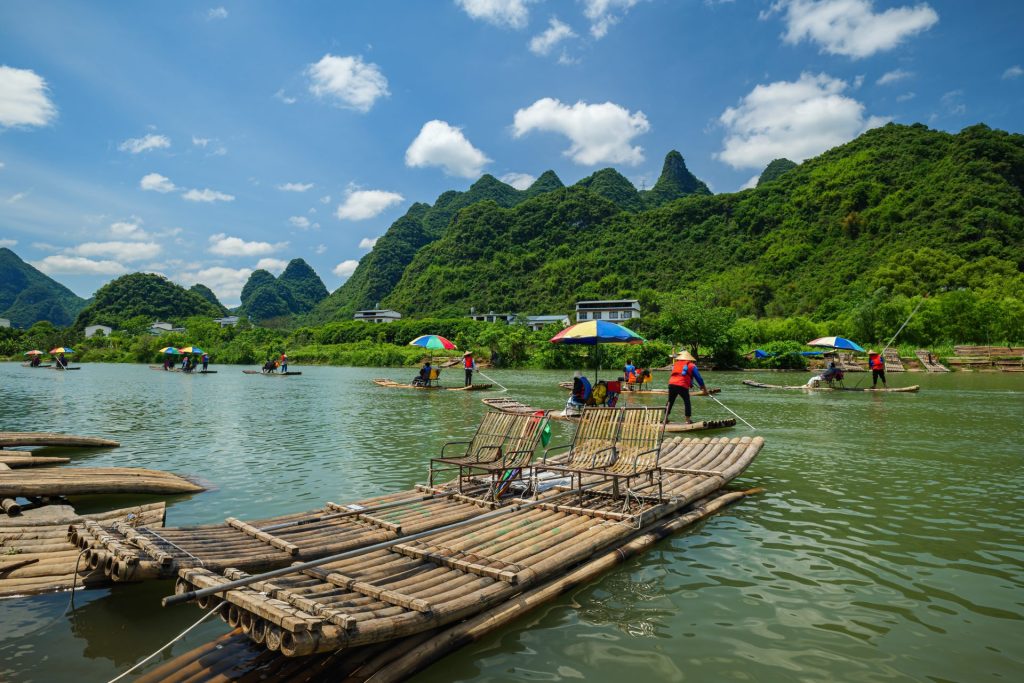
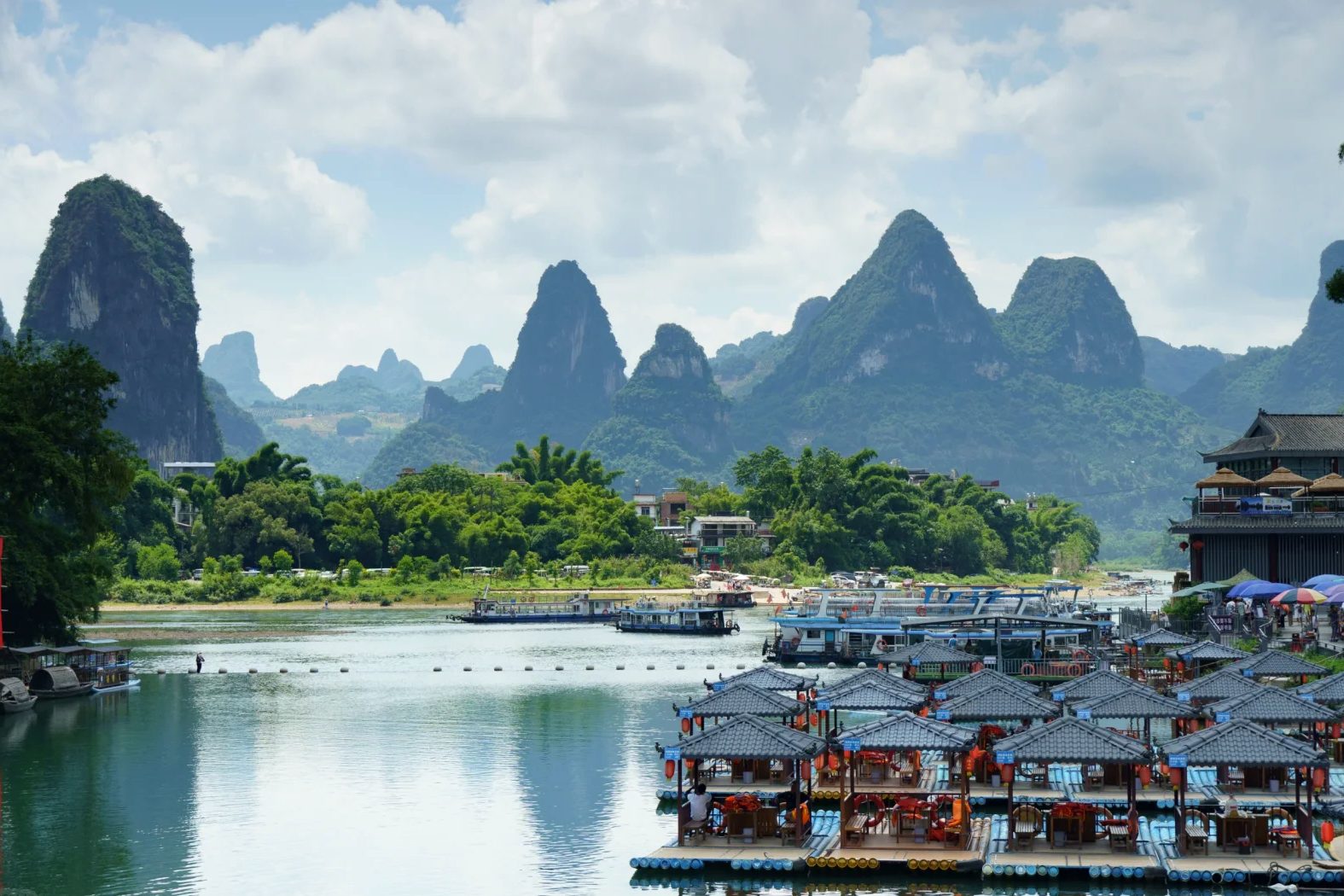
The Yulong River is a tributary of the Li River, and its water is even clearer than that of the Li River. The rafting is done with manually poled rafts, limited to two people per raft, making it a quiet and eco-friendly experience.
Recommended route: The section from Jinlong Bridge to Jiuxian, covering approximately 6 kilometers and taking about 2 hours. Along the way, you’ll pass through five shallows, where the rafters control the flow of the water to create a “riding the rapids” experience—both thrilling and safe. The banks are lined with vast rice paddies, villages, and ancient bridges—including the Song Dynasty-era Xiangui Bridge, located along this stretch. The standard ticket price is 160 yuan per raft (insurance not included); it’s recommended to book online in advance to avoid lines.
Tips: The scenery is most vibrant during spring when the rapeseed flowers are in bloom and in autumn when the rice is ripening. When taking photos on the bamboo raft, be careful not to drop your phone in the water—people lose their phones here every year.
12:00 PM: Disembark at Jiuxian Pier and find a farmhouse restaurant in Jiuxian Village for lunch. We recommend Laogen Farmhouse Restaurant, whose signature dishes are free-range chicken soup and Liupu taro braised pork belly (Liupu taro is a Guangxi specialty, known for its starchy, chewy texture and rich flavor). Prices range from 40 to 50 yuan per person.
1:30 PM: Bike ride along the Ten-Li Gallery.
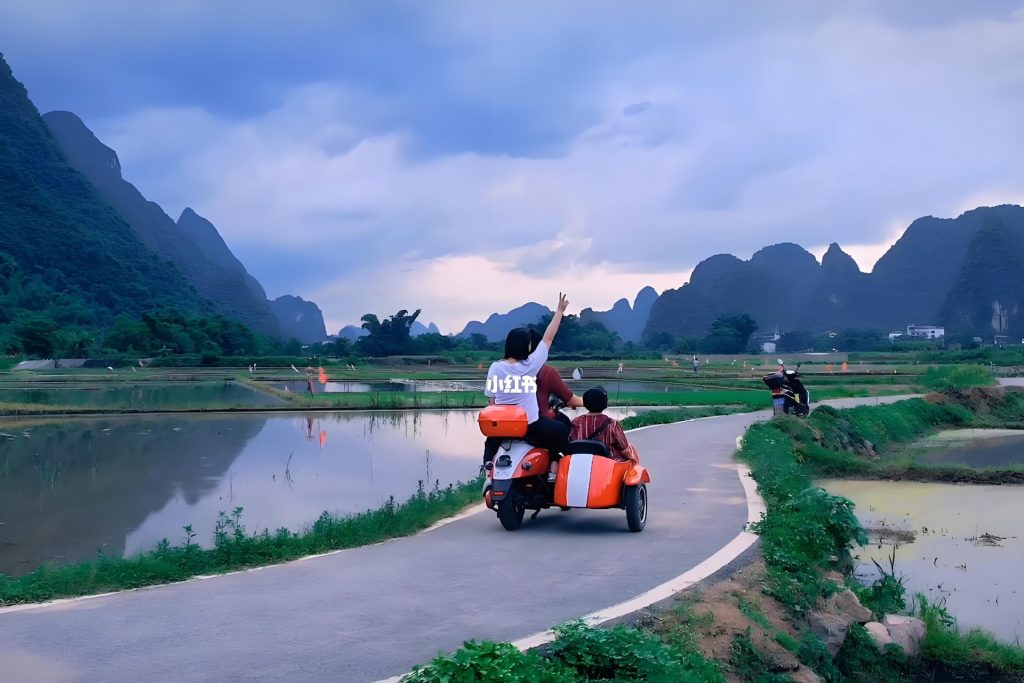
It takes about a 15-minute bike ride from Jiuxian Pier to reach the Ten-Li Gallery. This is a scenic road approximately 5 kilometers long, named for the dense karst peaks along the route.
How to Rent a Bike: Rental shops are everywhere in Yangshuo County and along the Yulong River. Standard bikes cost 20 yuan per day, mountain bikes 40 yuan per day, and electric bikes about 50 yuan per day.
Highlights Along the Way:
- Rock formations resembling a dolphin leaping out of the water and a camel crossing a river
- The Great Banyan Tree—a thousand-year-old banyan tree with a canopy covering 700 square meters
- Moon Hill—A natural hole in the mountaintop resembles a full moon. This is a popular rock-climbing spot with over 60 well-established climbing routes
Evening: Return to West Street for dinner. Try Shouzi Rice Noodles (12 yuan per bowl—Yangshuo’s most famous Guilin rice noodle shop), or try a different beer-braised fish restaurant.
Day 3 (Yangshuo): Highlights of the Li River (Xingping Ancient Town)
9:00 a.m.: Depart from Yangshuo County to Xingping Ancient Town.
How to Get There:
- Yangshuo High-Speed Rail Station: Take a taxi from Yangshuo County to Yangshuo Station (about 40 yuan, 15 minutes), then take the high-speed rail to Xingping Station (10 minutes, about 15 yuan)
- Taxi/Private Car Directly to Xingping Ancient Town: About a 40-minute drive from Yangshuo County, costing around 100 yuan
10:30 AM: Xingping Ancient Town.
Xingping is the endpoint of the Li River’s most scenic stretch and is much quieter than Yangshuo County. The cobblestone old street, the historic opera stage, and the ancient pier have all been preserved in their original state. The town isn’t large; one hour is plenty of time to explore.
12:00 PM: Lunch in Xingping Town. Beer-braised fish in Xingping is cheaper than on Yangshuo’s West Street; you can enjoy a decent meal for 40–50 yuan per person.
1:30 PM: Take a photo in front of the 20-yuan banknote backdrop.
Walk along the riverbank from Xingping Pier for about 15 minutes to reach “Huangbu Reflection,” the location featured on the 20-yuan banknote. Remember to bring a 20-yuan note to hold up for comparison in your photo—this is one of China’s most famous “photo spots” where you can recreate the image on the banknote.
3:00 PM: Return to Yangshuo County from Xingping. If you have time, take a Li River bamboo raft ride from Xingping Pier (about 80 yuan per person, 30 minutes) to see the Nine-Horse Painting Hill; it offers a closer view of the water’s surface than a regular cruise boat.
Evening: Return to Yangshuo West Street, find a quiet café to relax, or head to a bar to enjoy some live music.
Day 4 (Yangshuo): Free Day (Three Options)
If you have an extra day, choose one of the following three options.
Option 1: Sunrise at Xiangong Mountain (Recommended)
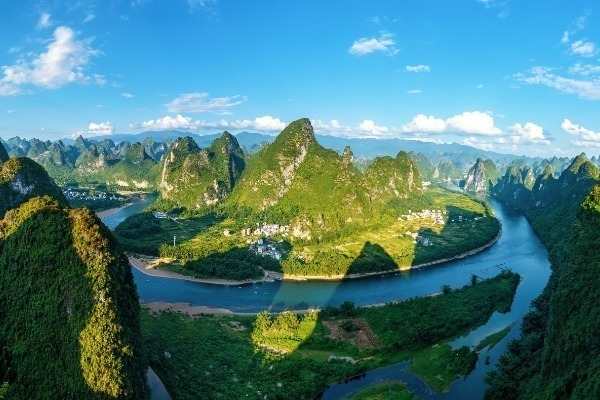
Wake up at 4:00 a.m. and take a private car from Yangshuo County Town—the drive to Xiangong Mountain takes about 50 minutes. The hike to the summit takes about 20 minutes. The sun rises around 5:30 a.m. From the summit, you’ll have a bird’s-eye view of the Great Bend of the Li River—the layered karst peaks shrouded in morning mist. The moment the sun rises from behind the mountains is well worth sacrificing a few hours of sleep. The private car fare is 200–300 yuan, and the entrance fee is 60 yuan.
Option 2: Rock Climbing Experience
Yangshuo is a paradise for rock climbing enthusiasts in China, with over 60 well-established climbing routes around Moon Hill. You can sign up for a tour at a rock climbing club on West Street; a half-day experience, including an instructor and equipment, costs about 300–500 yuan per person. Beginners are welcome, and instructors will provide guidance throughout the session.
Option 3: Yinziyan Cave
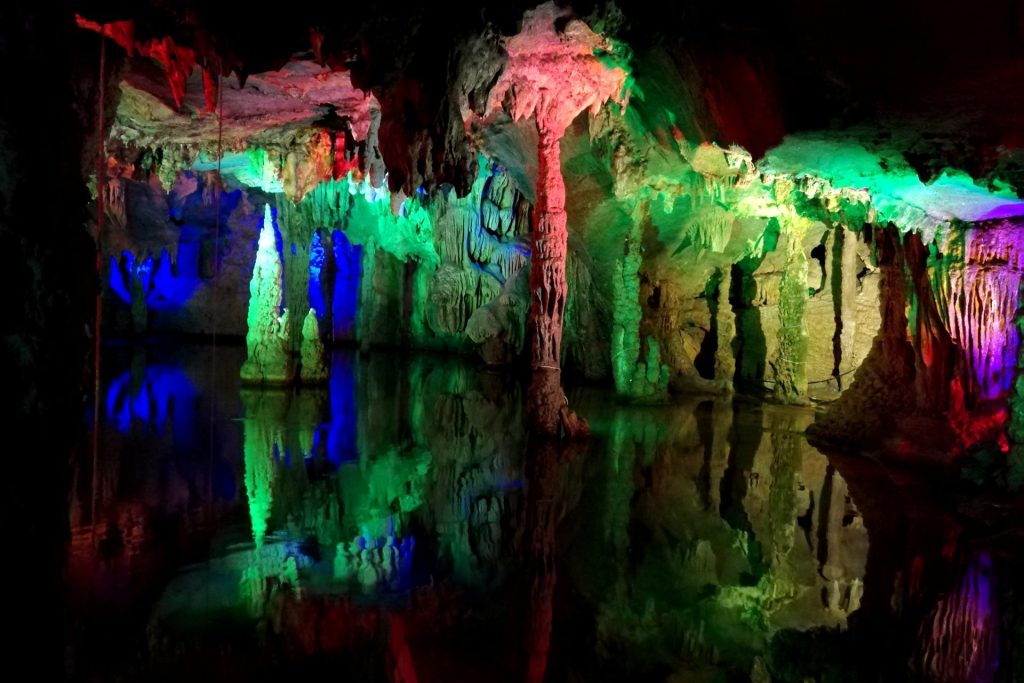
Yangshuo’s karst landscape isn’t limited to the surface—there are wonders underground as well. Yinziyan Cave is Yangshuo’s most famous cave, where the stalactites glisten like silver under the lights. It’s about a 40-minute drive from Yangshuo County, and admission is 65 yuan. The walking tour inside the cave takes about 1.5 hours.
What to Eat?
A Complete Guide to Guilin and Yangshuo

Guilin Rice Noodles (Most Authentic in Downtown Guilin)
The soul of Guilin rice noodles lies in the broth—simmered for over a dozen hours using pork bones, beef bones, and more than a dozen spices. The noodles are topped with braised beef, guoshao (fried pork rind), pickled green beans, and peanuts.
- Downtown Guilin: Tonglai Rice Noodles (Zhengyang Pedestrian Street, 10–12 yuan per bowl)
- Yangshuo: Shouzi Rice Noodles (West Street, 12 yuan per bowl)
- If you look in the ordinary alleys of downtown Guilin, you can find bowls for 8–10 yuan.
Beer Fish (Yangshuo’s No. 1 Specialty)
Fresh fish from the Li River is braised with beer, tomatoes, and chili peppers. Swordbone fish is the best choice—its flesh is firm and free of small bones.
- Where to Eat: Master Chef Beer Fish (Most famous on West Street, 60–80 yuan per person)
- Beer fish in Xingping Ancient Town is cheaper than on West Street, at 40–50 yuan per person.
Stuffed Snails (Yangshuo Specialty Snack)
The snail meat is removed, minced, and mixed with pork and shiitake mushrooms to form a filling, which is then stuffed back into the shells and steamed. Use a toothpick to pick out the filling and eat it. Stalls on West Street sell it for 10 yuan a serving.
Lipu Taro with Braised Pork Belly (A signature dish of the Guilin region)
Lipu taro is a specialty of Guangxi—starchy, chewy, and sweet. The taro and pork belly are layered and steamed together; the fat from the meat seeps into the taro, while the taro’s aroma infuses the meat. If you dine at a farmhouse-style restaurant, be sure to order this dish.
Youcha + Osmanthus Cake
Youcha is a traditional beverage of the ethnic minorities in northern Guangxi—made by stir-frying tea leaves, ginger, garlic, and peanuts, then boiling them in water; it has a slightly bitter taste that gives way to a sweet aftertaste. Osmanthus cake is a specialty dessert of Guilin, handmade fresh on the spot.
Payment and Language
The service system for foreign tourists in Yangshuo, Guilin, is well-established.
Payment:
Overseas bank cards are accepted at major scenic spots and commercial districts.
Alipay and WeChat Pay support payment via QR code when linked to foreign bank cards.
Yangshuo West Street has been designated as a “Tourism and Leisure Zone with Convenient Payment Options,” with full acceptance of foreign bank cards at key merchants.
Language:
- Foreign language service teams are stationed at Yangshuo Station and major ferry terminals.
- On Li River cruise boats, scanning a QR code allows you to switch between four languages: Chinese, English, Japanese, and Korean.
- Most merchants on Yangshuo West Street can communicate in basic English.
- Street vendors and taxi drivers generally do not speak English and rely on translation apps and gestures.
Emergencies
| Situation | What to Do |
| Call the Police | Dial 110. There are English-speaking operators, but you may need to wait to be transferred. |
| First Aid/Ambulance | Call 120. |
| Lost and Need Directions | Write the Chinese name of your destination on your phone and show it to a passerby. Young people generally speak a little English, but don’t expect to communicate fluently. |
| Lost Passport | File a police report to obtain a proof of loss, then go to your country’s Consulate General in Guangzhou or Guilin to apply for a replacement travel document. |
| Need to see a doctor | Yangshuo County Hospital provides basic medical care; for serious conditions, it is recommended to go to an international hospital in downtown Guilin (20 minutes by high-speed rail) or Guangzhou (2 hours by high-speed rail). |
Essential Chinese Phrases

Tourism professionals in Yangshuo are no strangers to English, but they’ll be even happier if you learn a few phrases in Chinese.
Chinese
Pinyin
English Meaning
你好
Nǐ hǎo
Hello
谢谢
Xiè xie
Thank you
再见
Zài jiàn
Goodbye
多少钱
Duō shao qián
How much?
这个
Zhè ge
This one
不要
Bú yào
I don’t want this (useful for street vendors)
厕所
Cè suǒ
Toilet
地铁站
Dì tiě zhàn
Subway station
酒店
Jiǔ diàn
Hotel
买单
Mǎi dān
Check please (at a restaurant)
Appendix: A Streamlined Guide to Exploring Only Yangshuo (3 Days)
If you can only visit one place on your trip, choose Yangshuo—the scenery here is more concentrated and the experiences more diverse than in downtown Guilin. Below is a streamlined 3-day itinerary starting from Yangshuo Station.
Day 1: Arrive in Yangshuo and check into a hotel near West Street. In the evening, stroll along West Street, enjoy Master Fu’s Beer Fish, and find a bar to listen to live music.
Day 2: Take a bamboo raft ride on the Yulong River (Jinlong Bridge to Jiuxian section, about 2 hours) + enjoy a farmhouse-style lunch in Jiuxian + cycle along the Ten-Li Gallery (rent an electric scooter, about 3 hours). Return to West Street in the evening and have Shouzi Rice Noodles for dinner.
Day 3: Highlights of the Li River (Xingping Ancient Town + photo op at the 20-yuan banknote backdrop, about half a day). In the afternoon, return home or take the high-speed rail from Yangshuo Station.

A few final thoughts
Guilin and Yangshuo are different. Guilin is a city surrounded by mountains and water, while Yangshuo is a city nestled within the mountains and water. Guilin has Elephant Trunk Hill and the “Two Rivers and Four Lakes,” but Yangshuo has bamboo rafts on the Yulong River, bike rides along the Ten-Li Gallery, and the beer fish and bars on West Street—only when you’re sitting on a bamboo raft drifting down the Yulong River, with the rice paddies and karst peaks on both banks slowly receding into the distance, will you understand why, ever since the 1980s, foreign backpackers who come to Yangshuo never want to leave.
Combine a visit to Guilin with one to Yangshuo: first, experience the city nestled within the landscape; then, experience the landscape that forms the city—the Li River connects the two towns in a single thread. As you drift downstream by boat, the scenery unfolds before your eyes, page by page. There’s no better way to discover this region.
If you’d like a carefully tailored itinerary for a worry-free trip, feel free to contact us! Bespoke China Travel creates personalized travel experiences that reveal the real China — its culture, landscapes, cuisine, and people — through thoughtfully designed journeys tailored to every traveler.