
The Complete Guide to Applying for a Chinese Tourist Visa (L Visa)
Is the information online too confusing? This article doesn’t just repost official announcements—it lists everything you need to know about the L visa, including the required documents, fee schedule, appointment process, and tips on how to avoid common pitfalls.
Updated June 30, 2026

If you’re planning a trip to China, you’ll likely face one unavoidable question: how to apply for a visa.
There’s plenty of information online about Chinese visas, but it’s either outdated or written in official language that needs translation. This article doesn’t just regurgitate embassy announcements; instead, it combines the latest 2026 policies with real-world application experience to tell you what you need to prepare, how much it costs, and what the process entails—plus some good news: you might not even need this article at all.
First Question: Do You Really Need a Visa?
Before you start filling out the application form, confirm one thing: Is your passport’s country of issue on China’s visa-exemption list?
As of June 2026, holders of ordinary passports from 50 countries can enter China for business, tourism, visiting relatives and friends, cultural exchanges, or transit—for stays of up to 30 days—without a visa.
These 50 countries include:
- 35 European countries: France, Germany, Italy, Spain, the Netherlands, Switzerland, Ireland, Hungary, Austria, Belgium, Luxembourg, Poland, Portugal, Greece, Sweden, the United Kingdom, Russia, etc.
- 2 countries in Oceania: Australia, New Zealand
- 7 countries in Asia: Japan, South Korea, Brunei, Saudi Arabia, Oman, Kuwait, Bahrain
- 6 countries in the Americas: Canada, Brazil, Argentina, Chile, Peru, Uruguay
Note: This visa-free policy is currently in effect until December 31, 2026 (September 14, 2026 for Russia; Brunei has not specified an expiration date). If you plan to visit China after the end of the year, be sure to check whether the policy has been extended before you depart.
Suppose you meet the visa-free requirements—congratulations! You can close this article and just book your flight.
If your country isn’t on this list, or if you plan to stay longer than 30 days, keep reading.
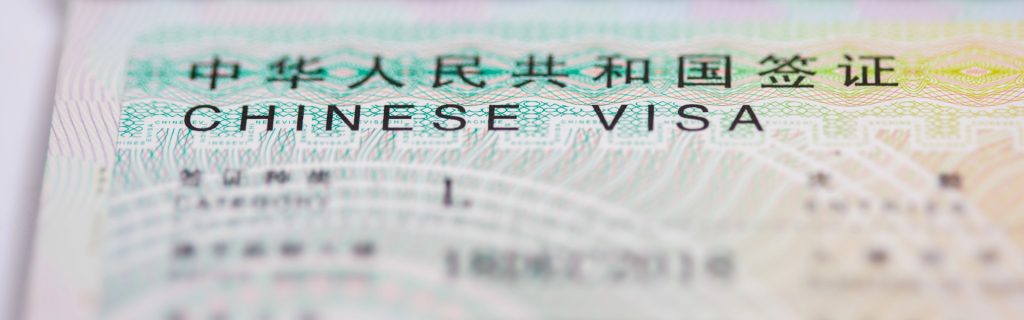
What is an L visa?
“L” stands for the first letter of the Chinese word for “travel” (旅) in pinyin and is specifically designed for foreigners visiting China for tourism. Holders of an L visa can travel freely within mainland China, but additional permits are required for certain restricted areas (such as Tibet).
Visa Fees: Depends on Your Passport’s Country of Issuance
China’s visa fees follow the principle of reciprocity—fees vary by country of citizenship.
Below are the reference fees for select countries in 2026 (standard single-entry visa):
| Country | Fee (approx. RMB) | Visa Validity |
| United States | ¥1,540 | 10-year multiple-entry, 60 days per visit |
| United Kingdom | ¥1,380 | 6-month single-entry |
| Canada | ¥540 | 6-month single-entry |
| Australia | ¥520 | 6-month single-entry |
Expedited Processing Fees: Expedited services typically incur an additional fee of 50%–100%. Specific amounts are subject to the announcements made by the local visa application service center.
Fee Breakdown: The visa fee consists of two parts—the visa processing fee charged by Chinese embassies and consulates + the service fee charged by the visa application center.
Application Process: Five Steps
Step 1: Prepare Documents
List of Essential Documents:
| Document | Specific Requirements |
| Valid passport | Valid for at least 6 months, with at least 2 blank visa pages |
| Visa application form | Complete online, print, and sign |
| Photo | Recent, white background, 48mm × 33mm passport-style photo |
| Round-trip flight itinerary | Showing the complete itinerary for entry and departure |
| Hotel reservation confirmation | Covering the entire duration of your stay in China |
| Invitation Letter (Optional) | Issued by an organization or individual in China (must include the inviter’s seal/signature, personal information, and itinerary details) |
Tip: An invitation letter is not required for an L visa, but consular officials reserve the right to request additional materials; it is safer to prepare one in advance.
Step 2: Online Submission
Log in to the China Visa Online Application website (https://consular.mfa.gov.cn/VISA/), fill out the application form online, and upload your documents.
After submission, the application enters the preliminary review stage (3–5 business days), during which the embassy or visa center will provide feedback on any required corrections or additional information.
Step 3: Schedule an Appointment for Submission
Once the preliminary review is approved, log in to the China Visa Application Service Center website (www.visaforchina.cn) to schedule an appointment for submission.
Note: Most visa centers operate on an appointment-only basis and do not accept walk-ins.
Step 4: In-Person Submission + Fingerprint Collection
Go to the visa center or embassy/consulate at your scheduled time to submit your documents and have your ten fingerprints collected.
Individuals Exempt from Fingerprint Collection:
- Those under 14 or over 70 years of age
- Holders of diplomatic passports
- Those who have had their fingerprints collected at the same embassy or consulate with the same passport within the past 5 years
- Those missing any of their ten fingers
Special Note: Until December 31, 2026, short-term visas with a stay of 180 days or less are exempt from fingerprinting. This includes the vast majority of L tourist visa applicants.
Step 5: Pay the Fee + Wait
Pay the fee upon submission and obtain a receipt. Wait for the application to be processed.
Processing Time: How Long Will It Take?
| Service Type | Processing Time | Notes |
| Standard | 4 business days | Standard procedure |
| Expedited | 2–3 business days | Additional fee |
| Super-Expedited | 1 business day | Additional fee; acceptance subject to the embassy’s discretion |
Recommendation: Submit your application at least one month before departure. Do not book non-refundable or non-changeable flights and hotels until you have received your visa—if there are issues with your documents that cause delays, you will bear the financial loss.

After Receiving Your Visa: Remember These Three Things
Once the visa is affixed to your passport, be sure to check these three details:
- Validity Period (Enter Before): You must enter the country before this date; the visa becomes invalid after this date.
- Number of Entries (Entries): A single-entry visa becomes invalid after one entry; a multiple-entry visa can be used repeatedly.
- Duration of Each Stay: Calculated from the day after entry; overstaying will result in a daily fine.
Tips to Avoid Pitfalls
Do not mail your documents: Unless you are exempt from fingerprinting (short-term visas in 2026 are typically exempt), the L visa requires you to appear in person; applications cannot be submitted by mail.
Do not work on an L visa: The L visa is limited to tourism, visiting relatives, and personal matters. Any paid activity requires applying for a Z (work) visa.
Do not expect a visa on arrival: China does not offer visa-on-arrival for general tourists; applying in advance is the only correct approach.
Check the latest policies before departure: Visa policies are subject to change; refer to the latest notices on the Chinese Consular Services website (cs.mfa.gov.cn) and at your local Chinese Visa Application Service Center.