
Top 10 Scenic Spots in China
China’s scenic beauty goes far beyond postcard landmarks. From misty karst rivers to sacred mountain ranges and ancient imperial architecture, the country offers an extraordinary range of landscapes shaped by nature, history, and culture. This guide highlights ten of the most visually striking places in China, focusing on scenery, seasonal charm, and how travelers can experience each destination in a meaningful and realistic way.
Updated June 23, 2026
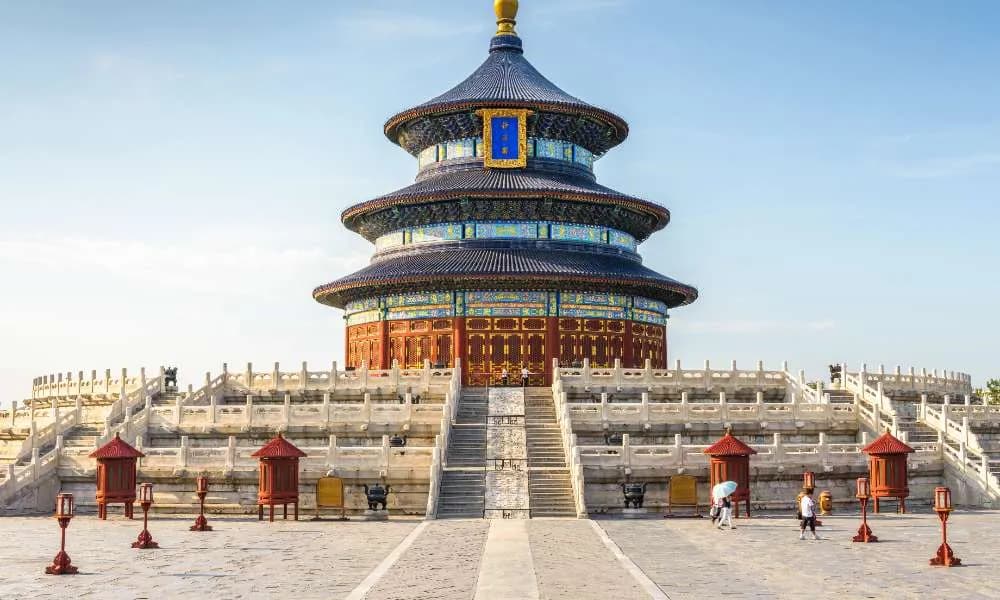
There’s a reason China keeps showing up on “most beautiful countries” lists — but honestly, the postcard shots only scratch the surface. Sure, you’ve seen the Great Wall and karst mountains a hundred times on Instagram. What those photos don’t capture is the way morning mist rolls through a valley and completely transforms it in minutes, or how a single shift in light can make a 1,300-year-old temple look like it’s floating.
This isn’t another generic “must-see” roundup. We picked these ten places because they genuinely surprised us — the kind of spots where you stop walking, put your phone down for a second, and just… look. We’ve kept the focus on what matters when you’re actually there: the scenery, the atmosphere, and the little details that make each place feel different from the last one.
1. The Great Wall of China – Beijing
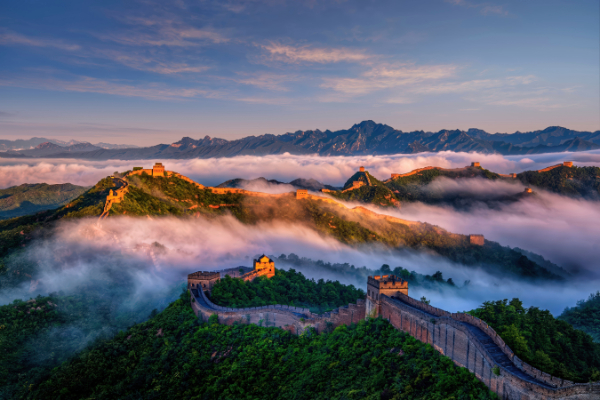

Everyone knows the Great Wall. But what most people don’t realize is how different it looks depending on which section you visit and what time of day you show up. The restored parts are impressive, sure — but it’s the wild, crumbling stretches that really stick with you.
The Wall runs over 21,000 kilometers across China, but the sections around Beijing are where most travelers start. Mutianyu is probably the best all-rounder: well-maintained but not overrun, with watchtowers that pop out of the morning fog like something out of a painting. Jinshanling and Simatai are rougher around the edges — and that’s exactly the point. These are the sections where you can hike for an hour without seeing another soul, with the wall just crumbling away into the hills on either side.
When to go: Late April through early June, then September to October. You’ll dodge the summer heat and the winter cold. Snow on the Wall is stunning, but only if you’re prepared for sub-zero temperatures.
Pro tip: Get there before 8 AM. Most tour groups roll in around 9:30, so you get a solid 90 minutes of near-empty wall if you time it right. And skip Badaling — it’s the most crowded section by a huge margin.
2. Zhangjiajie National Forest Park – Hunan


You know those floating mountains from Avatar? Yeah, they’re real — or at least, they’re based on something real. Zhangjiajie’s sandstone pillars shoot straight up from the forest floor, and when the clouds roll in (which happens a lot), the whole place genuinely looks like it belongs on another planet.
The park is massive — over 4,800 hectares — and it’s split into a few main areas. Yuanjiajie has the most dramatic viewpoints, Tianzi Mountain is where you go for that “above the clouds” feeling, and Golden Whip Stream is a nice flat walk through the valley if your legs need a break from all the stairs. The mist here isn’t just a backdrop; it basically runs the show. You can watch a peak disappear and reappear five times in ten minutes.
When to go: April to October, but May and September are the sweet spot — fewer people, decent weather, and the peaks are still wrapped in enough mist to feel magical.
Pro tip: If you can, stay overnight near the park entrance and get there for opening. The early morning light hitting those pillars through the fog is something you won’t forget. The cable cars and elevators are worth using — save your energy for the actual walking parts.
3. Li River and Guilin Landscapes – Guangxi


If you’ve ever seen a traditional Chinese landscape painting, you already have some idea of what the Guilin area looks like. But standing there in person is a different experience entirely. The limestone karst peaks just rise out of nowhere from these flat green plains, and when they’re reflected in the river, it’s hard to tell where the mountains end and the water begins.
The classic route is the boat ride from Guilin down to Yangshuo — about four hours of slowly drifting past bamboo groves, tiny villages, and the occasional water buffalo chilling on the riverbank. It sounds cliché, but there’s a reason this scenery ended up on the back of the 20-yuan note. Light rain actually makes it better; everything goes soft and painterly.
When to go: April through October. Summer is lush and green, autumn gives you clearer skies. Winter is doable but the karst hills lose some of their drama without the foliage.
Pro tip: Don’t just do the boat ride and leave. Rent a bike in Yangshuo and ride through the countryside between the peaks — it’s a completely different way to experience the landscape, and you’ll pass through villages where tourists rarely go.
4. Jiuzhaigou Valley – Sichuan
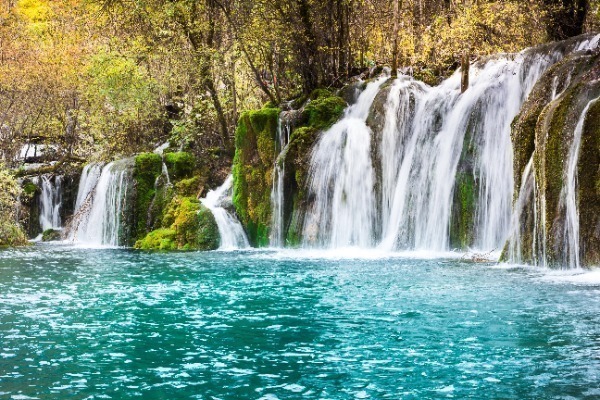

Jiuzhaigou is one of those places that almost doesn’t look real. The lakes here are absurdly blue and green — not in a filtered, oversaturated way, but genuinely, naturally vivid. It’s because of the mineral content and the water clarity, but standing there, you don’t really care about the science. You just stare.
The valley sits at high altitude (around 2,000 to 3,000 meters), and it’s laid out as a series of layered lakes, waterfalls, and travertine terraces connected by wooden boardwalks. Autumn is when it really goes all out — the forests around the lakes turn gold and red, and those colors get reflected in the water, doubling the effect. It’s the kind of place where every 50 meters there’s another “wait, look at this” moment.
When to go: September and October are peak season for a reason — the fall colors are incredible. Spring is quieter and still beautiful, just less dramatic.
Pro tip: Book well in advance. The park limits daily entries, and during peak season, tickets sell out fast. Also, pack layers — the altitude means the weather can flip from warm sunshine to cold wind in the time it takes to walk between two lakes.
5. Huangshan (Yellow Mountains) – Anhui


Huangshan has been inspiring Chinese artists for centuries, and once you’ve seen the “sea of clouds” phenomenon, you’ll understand why. Granite peaks, twisted pines clinging to cliff edges, and valleys filled with rolling mist — it’s basically a classical painting that you can walk into.
The main areas to hit are Bright Summit Peak for sunrise, West Sea Canyon for the most dramatic cliff walks, and Flying-over Rock for that iconic lone-boulder-on-a-peak shot. You can reach most viewpoints by cable car, but the real magic happens on the walking trails between them — narrower paths where the mist closes in and you can’t see more than a few meters ahead, then suddenly opens up to reveal an entire ridge.
When to go: April to November for the standard experience. Winter is actually amazing if you’re up for it — snow-covered peaks and frozen waterfalls — but you need to be an experienced hiker and check conditions carefully.
Pro tip: Spend at least one night on the mountain. The sunrise and sunset are the highlights, and if you day-trip it, you’ll miss both. Weather changes fast up there, so check the forecast the morning of and be ready to adjust plans.
6. The Forbidden City – Beijing


The Forbidden City isn’t “scenic” in the traditional sense — there are no mountains or rivers here. But as a feat of visual design, it’s hard to beat. The sheer scale of it hits you the moment you walk through the gate: courtyard after courtyard, golden roofs stretching to the horizon, all laid out with a precision that feels almost obsessive.
At 720,000 square meters, it’s the largest imperial palace complex in the world, and the symmetry is the whole point. Walking along the central axis, you can feel how every single element was placed according to a very specific worldview. For the best overview, climb the small hill in Jingshan Park just north of the palace — you’ll see the entire layout spread out below you, and it’s one of those views that makes you go quiet for a moment.
When to go: Spring (April–May) and autumn (September–October). Summer in Beijing is brutally hot, and the palace has almost no shade.
Pro tip: Tickets must be booked in advance — there’s a daily cap, and during peak season, they sell out days ahead. Arrive right when the gates open. The courtyards are nearly empty for the first hour, and the morning light on those golden roofs is gorgeous.
7. Potala Palace – Lhasa, Tibet
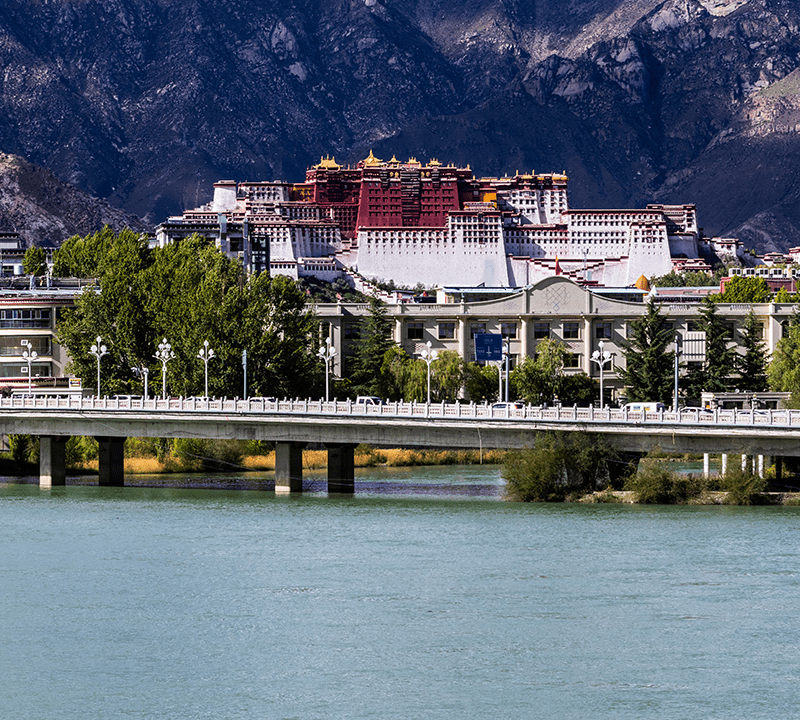
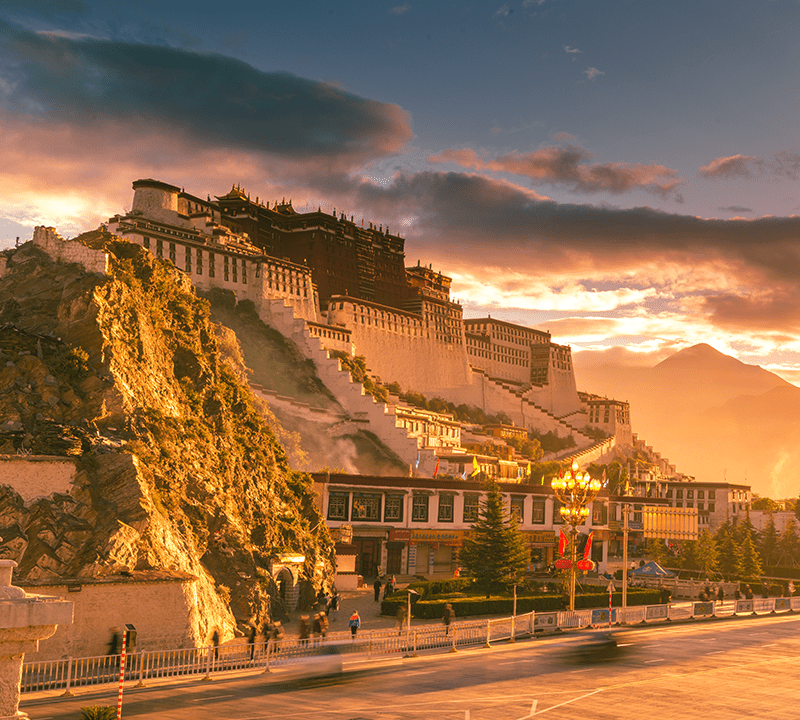
The Potala Palace is one of those buildings that doesn’t feel quite real until you’re standing right in front of it. It just rises out of the hillside — this massive white-and-red structure towering over Lhasa, with the Himalayan plateau stretching out behind it. Photos don’t really capture the scale or the silence.
The palace dates back to the 7th century and served as the winter home of the Dalai Lamas for centuries. Inside, it’s a labyrinth of chapels, murals, and sacred relics. Outside, the views across Lhasa Valley are expansive in a way that’s hard to describe — the city stretches out below, and beyond it, bare mountains fade into the horizon. The altitude (3,600 meters) adds a physical dimension to the experience; everything feels a little more intense when you’re slightly short of breath.
When to go: May to October gives you the best weather window. Winters are bitterly cold and some roads may be closed.
Pro tip: Give yourself at least a full day in Lhasa before visiting the palace to acclimatize. Tickets are limited per day, so either book through a tour operator or get there early and be prepared to wait. Don’t rush it — the combination of altitude and altitude means you’ll want to take it slow anyway.
8. West Lake – Hangzhou, Zhejiang


West Lake is the opposite of every other place on this list, and that’s exactly why it belongs here. There are no dramatic peaks or sweeping gorges — just a calm, gently curved lake surrounded by willow trees, stone bridges, and low hills. It’s the kind of place that makes you slow down without realizing it.
The lake has been a retreat for poets and scholars for over a thousand years, and you can feel that history in the way it’s laid out — causeways, pagodas, and carefully placed viewpoints that frame the scenery like a series of compositions. The experience shifts with the seasons: lotus flowers blooming across the water in summer, misty mornings in autumn, and a quiet stillness in winter that’s almost meditative.
When to go: Spring (March–May) and autumn (September–November) are the most comfortable. Summer is hot and humid but the lotus blooms make up for it.
Pro tip: Go early. Like, really early — before 7 AM. The lake takes on a completely different character when it’s just you, the mist, and a few elderly locals doing their morning exercises. Rent a bike and circle the lake at your own pace; it takes about two hours and you’ll see parts that most tourists miss.
9. Mount Emei – Sichuan


Mount Emei is one of China’s Four Sacred Buddhist Mountains, and it wears that title well. The lower slopes are dense, green, and almost tropical — warm air, thick vegetation, and the occasional monkey troop that has zero fear of humans (keep your snacks hidden). As you climb higher, the environment shifts: the trees thin out, the air cools, and by the time you reach the Golden Summit, you’re in a completely different world.
The mountain is layered in the most literal sense. Each elevation zone has its own character, from the warm forests at the base to the alpine conditions near the top. Temples are scattered throughout, some perched on cliff edges in a way that seems physically impossible. Cloud cover is frequent, and when it clears, the views across the surrounding peaks are breathtaking.
When to go: April to October for hiking. Winter is possible but only for experienced trekkers — the upper sections get significant snowfall.
Pro tip: Take the cable car to the Golden Summit and spend your energy hiking the middle sections, where the scenery is richer and the temples are more interesting. If you’re staying overnight, aim for a summit sunrise — on a clear day, you can see the peak’s shadow projected onto the clouds below, which locals call “Buddha’s Halo.”
10. Yangtze River and Three Gorges – Hubei and Chongqing


The Yangtze is China’s longest river, and the Three Gorges section is where it puts on its best show. For roughly 200 kilometers, the river cuts through steep cliffs and narrow passages, and the scale of it is hard to wrap your head around from photos alone. This isn’t a place you “visit” — it’s a place you move through.
The three gorges — Qutang, Wu, and Xiling — each have a distinct personality. Qutang is the shortest but most dramatic, with sheer rock walls squeezing the river to a narrow channel. Wu is the most photogenic, with misty peaks rising on both sides. Xiling is the longest and most varied, with gentler bends and hidden side canyons. A multi-day cruise lets you experience all three, plus smaller tributaries that the big boats can’t reach.
When to go: Spring and autumn offer the best weather for cruising. Summer can be hot and humid on deck; winter is gray and cold.
Pro tip: If your budget allows, pick a cruise with a balcony cabin. The scenery changes constantly — different light, different rock formations, occasional riverside villages — and having your own outdoor space to just sit and watch it all go by makes a huge difference.
FAQs
- What’s the best time of year to visit China’s scenic spots?
- Spring and autumn are your safest bets across the board — April to June and September to October generally give you the best combination of weather, visibility, and manageable crowds. That said, some places (like Zhangjiajie and Jiuzhaigou) have shorter optimal windows, so it’s worth checking each destination individually.
- Are these spots doable for a first-time visitor to China?
- Absolutely. All ten are well-established tourist destinations with decent infrastructure. The main challenge is logistics — China is huge, and getting between these places takes time. A guided or private tour can take a lot of the stress out of planning, especially if it’s your first trip.
- How long would I need to visit several of these in one trip?
- Realistically, 10 to 14 days lets you cover three or four regions without feeling like you’re living in transit. Trying to squeeze in more than that and you’ll spend half your trip on trains and planes. Pick a geographic cluster — like Beijing + Huangshan, or Sichuan (Jiuzhaigou + Emei) — and build from there.
- Do I need to book anything in advance?
- Yes, and this is important. The Forbidden City, Jiuzhaigou, and Potala Palace all have daily visitor caps, and during peak season, tickets can sell out days or even weeks ahead. Book as early as you can, especially if you’re traveling between May and October.
- Is altitude a real concern?
- For Tibet (Lhasa) and Jiuzhaigou, yes — both sit above 3,000 meters. Most people adjust within a day or two, but it’s not something to ignore. Take it easy for the first 24 hours, stay hydrated, and don’t plan anything strenuous right away. If you have a heart or respiratory condition, talk to your doctor before the trip.